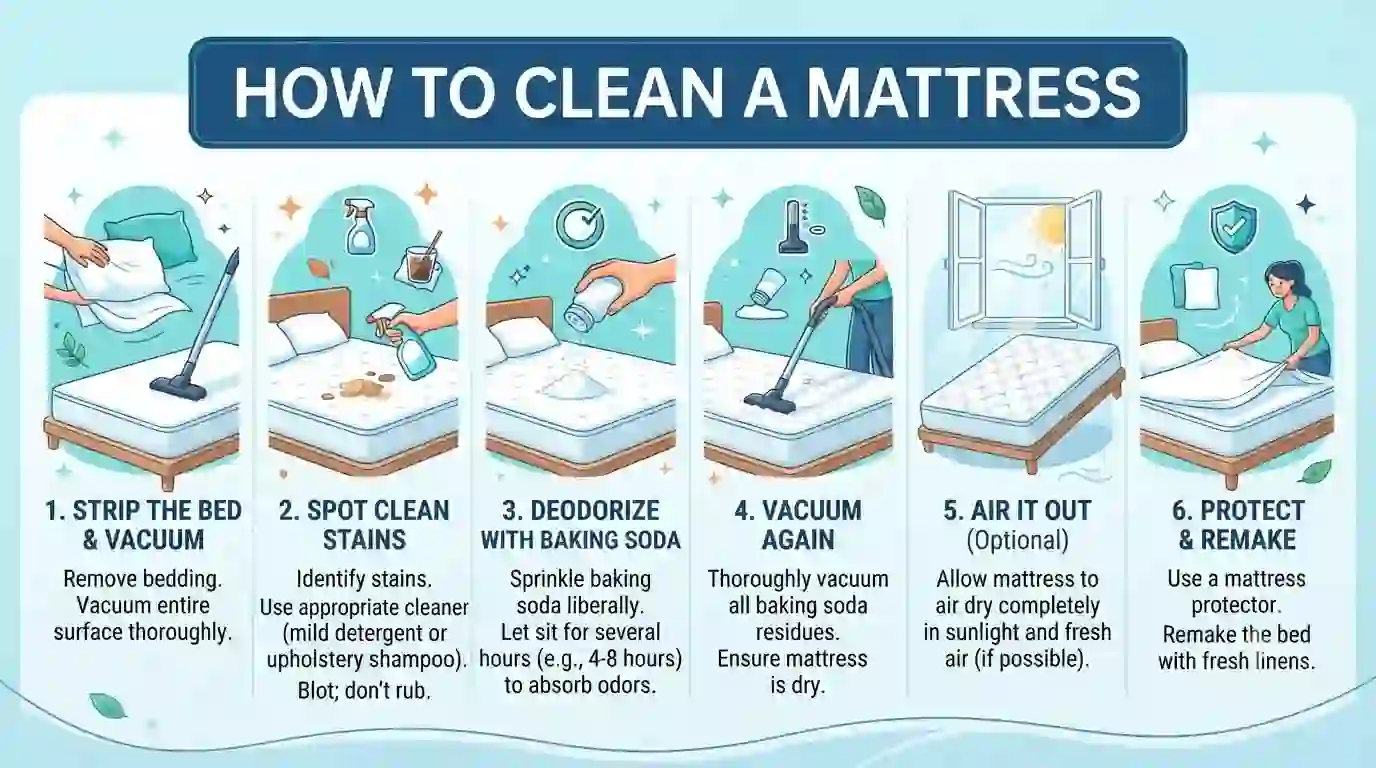
How to Clean a Mattress: The Ultimate Step-by-Step Guide for a Fresh Bed
Your mattress collects dead skin, sweat, dust mites, and accidental spills every single night. That hidden grime triggers allergies, disrupts sleep, and cuts your mattress lifespan short. Learning how to clean a mattress the right way stops this silent buildup. You restore a healthier sleep surface and protect your investment with simple, doable steps.
Why Cleaning Your Mattress Matters for Health
A mattress doubles in weight over a decade from accumulated dust, dead skin, and dust mite droppings. The Sleep Foundation confirms the average adult sheds 1.5 grams of skin each day, much of it settling into the bed. That organic debris feeds millions of microscopic dust mites. Their waste particles become airborne and trigger asthma, eczema, and year-round nasal congestion. The Asthma and Allergy Foundation of America lists dust mite allergens as one of the most common indoor triggers. Cleaning your mattress removes their food source and drastically reduces the allergen load. Beyond allergies, trapped moisture from body sweat fosters mold and bacteria growth. A study published in the Journal of Allergy and Clinical Immunology found that regular mattress cleaning reduces house dust mite allergen levels by over 80%. You breathe easier, sleep cooler, and wake up without stuffiness when you learn how to clean a mattress properly.
How to Clean a Mattress: Step-by-Step Basics
This core routine works on all standard innerspring, hybrid, and latex mattresses. Start by stripping all bedding. Wash sheets, pillowcases, and mattress protector in hot water (at least 130°F) to kill dust mites. Next, vacuum the entire mattress surface using the upholstery attachment. Work in slow, overlapping passes with the crevice tool along seams, piping, and tufts to suck up hidden debris. The Casper care guide recommends vacuuming for a full 5 minutes on each side. Pay extra attention to the corded edges where skin flakes settle. This foundational step answers how to clean a mattress at its simplest level—remove dry dirt before tackling moisture. Spot-treat any visible stains with an enzyme-based cleaner or a mild homemade solution (more on that later). Allow the mattress to air out for a few hours with windows open before remaking the bed. Sunlight adds a natural disinfecting boost.
How to Clean a Mattress with Baking Soda
Baking soda lifts odors, absorbs moisture, and loosens light stains without harsh chemicals. Directly sprinkle a thick coating all over the top of the mattress. Use a flour sifter for even distribution. Give it a minimum of two hours to sit. For heavy odors, extend contact time to 8 hours or overnight. The fine powder draws out acidic sweat residues and neutralizes smells. Gently work the soda into the fabric with a soft brush to boost absorption. After the wait, vacuum the mattress thoroughly using the upholstery tool. Repeat passes until no white residue remains. This method shows you how to clean a mattress without water while deodorizing deeply. Adding 10–15 drops of lavender or tea tree essential oil to the baking soda before sprinkling adds a light, bug-repelling scent. Tea tree oil also carries natural antimicrobial properties.
How to Clean a Mattress Stain: Urine, Blood, and Sweat
Protein-based stains need a cold-water approach and enzyme action. Heat sets these stains permanently. Tackle each type with a tailored method.
- Urine stains and odors: Blot fresh urine immediately with a dry cloth. Mix 8 ounces of 3% hydrogen peroxide, 3 tablespoons of baking soda, and 2 drops of liquid dish soap. Spray lightly onto the stain. Let it bubble for 15 minutes, then blot with a damp cloth. Repeat until the yellow mark fades. The peroxide oxidizes uric acid crystals and kills bacteria.
- Use a mixture of baking soda and cold water to remove blood stains. Work from the outer edge inward to prevent spreading. Let it dry, then vacuum. For stubborn marks, spray undiluted 3% hydrogen peroxide directly. Blot after 5 minutes. Avoid rubbing.
- Sweat and body oil rings: Mix equal parts white vinegar and cold water in a spray bottle. Mist the yellowed area and blot with a microfiber cloth. Follow with the baking soda sprinkle method to lift remaining moisture and odor.
Always test any cleaning solution on a hidden mattress corner first. Ensure the mattress label allows water-based cleaners.
How to Clean a Mattress After a Spill or Accident
Speed prevents a wet mattress from becoming a mold mattress. Soak up as much liquid as possible with a dry towel—press firmly, do not rub. Prop the affected area near a fan or open window. Set a hairdryer to a cool, no-heat setting to accelerate drying. Once the surface feels dry to the touch, apply the baking soda absorption treatment to pull moisture from deeper layers. Leaving a mattress damp for longer than 24 hours significantly increases the danger of mold growth, according to the Tuft & Needle mattress care sheet. If a large liquid volume soaked deep, stand the mattress on its side and aim a box fan at the wet spot for 6–8 hours. A waterproof mattress protector prevents future saturation.
How to Clean a Mattress Without Water (Dry Cleaning)
Memory foam and some gel-infused mattresses cannot tolerate liquid because moisture breaks down the foam structure. To clean a mattress without water, rely on dry extraction methods. Vacuum every inch with a high-suction HEPA-filter vacuum. For stains, use a dry carpet cleaner powder or a light dusting of baking soda as described earlier. Brush the powder in gently, let it absorb, then vacuum it away. Enzyme-based foam cleaners designed for upholstery work well too—they foam upon contact and require only blotting. Tempur-Pedic’s official care instructions stress never soaking memory foam. Following a water-free process protects the material while still showing you how to clean a mattress safely.
How to Clean a Mattress with a Steam Cleaner
Steam penetrates fabric to sanitize and kill dust mites, mold spores, and bed bug eggs without chemicals. Use a hand-held steam cleaner or a canister unit with an upholstery attachment set to medium heat. Hold the nozzle 6–8 inches from the surface. Move slowly in rows, allowing the steam to hit each section for 3–5 seconds. Overlap each pass. Immediately after steaming, run a dry vacuum extraction to remove loosened debris and moisture. Crank up a dehumidifier or run fans in the room to dry the mattress within 4 hours. This method teaches you how to clean a mattress deep-down while deactivating allergens. Check the manufacturer tag: some foam-core mattresses advise against steam. Hybrid and innerspring models handle it well.
How to Clean a Mattress Topper and Protector
Mattress toppers catch body oils, spills, and dust. Most egg-crate foam toppers allow spot cleaning with mild detergent and a damp sponge—never submerge. Memory foam toppers require the same dry cleaning approach as a memory foam mattress. Featherbeds and fiberfill toppers often go into a large commercial washing machine. Read care labels before washing; use a front-loading machine without an agitator. Dry completely on low heat with wool dryer balls. A zippered, waterproof mattress protector gets washed every month. Machine wash it in hot water with your sheets. This simple habit reduces how often you need to learn how to clean a mattress from ground zero.
Natural Solutions for How to Clean a Mattress (Vinegar, Enzymes)
Green cleaning options tackle stains and germs without synthetic fragrances or bleach. White vinegar’s acetic acid breaks down urine salts and kills surface mold. Mix one part distilled white vinegar with one part water in a spray bottle. Lightly mist the stain, blot, and let air-dry. The vinegar scent dissipates within hours. Enzyme cleaners use beneficial bacteria to digest organic matter like blood, vomit, and pet accidents. Brands such as Biokleen or Nature’s Miracle offer plant-based formulas. Spray the enzyme cleaner directly on the stain, cover with a damp towel, and let it work for the time specified on the label. Enzymes continue breaking down residues you cannot see, making this a powerful step in how to clean a mattress naturally.
How to Clean a Mattress Infested with Dust Mites
Dust mite colonies thrive in the warm, humid core of your bed. Combine vacuuming, low humidity, and allergen-proof encasements. Use a vacuum with a HEPA filter and a motorized brush to agitate the surface. After vacuuming, run a steam cleaner across the entire mattress to kill mites with heat. Maintain indoor humidity below 50% using a dehumidifier. Encase the mattress in a certified allergen-barrier cover that zips shut and traps remaining mites inside, where they eventually die. Wash all bedding weekly in 130°F+ water. The American Academy of Allergy, Asthma & Immunology endorses this integrated approach as the gold standard for controlling dust mite allergies. This sequence shows you how to clean a mattress and keep it mite-free long-term.
How to Clean a Mattress After Bed Bugs
Bed bug infestations demand more than cleaning—they require containment and treatment. First, vacuum the mattress, box spring, bed frame, and surrounding floor intensely. Immediately seal the vacuum bag in a plastic sack and discard it outdoors. Steam all seams, tufts, and folds at a temperature above 120°F, as bed bugs and their eggs die within minutes at that heat. Next, encase both mattress and box spring in bed-bug-proof covers labeled “bite-proof” and “escape-proof.” Leave the covers on for at least a year. Wash all nearby fabrics in hot water and dry on high heat. The Environmental Protection Agency advises that cleaning alone cannot solve an infestation; combine it with professional pest control treatment. Knowing how to clean a mattress after bed bugs means focusing on containment first.
Regular Maintenance: How Often Should You Clean a Mattress?
A practical schedule prevents the need for emergency deep cleans. Stick to this rhythm:
- Weekly: Wash sheets and mattress protector in hot water.
- Monthly: Vacuum the mattress top and sides with the upholstery tool.
- Seasonally: Sprinkle baking soda, let sit, vacuum, and rotate the mattress head-to-foot.
- Twice a year: Do a full deep clean including spot treatment, steaming (if allowed), and sunshine airing.
- Immediately: Treat any spill or accident.
Print a small checklist and tape it inside the linen closet. Tracking the habit keeps the task manageable and answers the question of how to clean a mattress consistently.
Professional Mattress Cleaning: When to Call Experts
DIY cleaning handles regular maintenance, but certain situations warrant trained help. Hire a certified professional if you notice widespread mold growth, a severe bed bug infestation, or deeply embedded odors that home treatments can’t budge. Professional services use truck-mounted hot water extraction machines that rinse, sanitize, and extract moisture in one pass. Look for firms certified by the Institute of Inspection, Cleaning and Restoration Certification (IICRC). Ask about their drying process—reputable cleaners guarantee a dry mattress within 4–6 hours. Expect to pay between $75 and $150 for a queen-size mattress. Even experts reinforce that knowing how to clean a mattress at home between visits extends the results.
Stain Removal Quick Reference Table
| Stain Type | Cleaning Solution | Method |
|---|---|---|
| Fresh urine | 3% hydrogen peroxide, baking soda, dish soap | Blot, spray mixture, let bubble, blot dry, apply baking soda, vacuum |
| Blood | Cold water, hydrogen peroxide (3%) or baking soda paste | Cold water blot, apply paste/peroxide, blot after 5 min, air dry |
| Sweat/yellowing | 50/50 white vinegar and water, baking soda | Mist vinegar solution, blot, sprinkle baking soda, wait, vacuum |
| Vomit | Enzyme cleaner, baking soda | Scrape solids, blot, apply enzyme cleaner, cover, blot, baking soda deodorize |
| Coffee/tea | Mild dish soap and cold water, vinegar | Blot, dab with soap solution, blot with cold water, dry fast |
| Mold/mildew | Rubbing alcohol (isopropyl) or vinegar | Dab on, let sit 10 min, blot, dry thoroughly in sunlight |
Frequently Asked Questions About How to Clean a Mattress
How to clean a mattress with baking soda and vinegar?
First, vacuum the mattress. Lightly mist stained areas with a 50/50 white vinegar and water solution. Let it dry, then sprinkle a thick layer of baking soda over the whole surface. Wait several hours, then vacuum thoroughly. The vinegar breaks down stains while baking soda absorbs moisture and odors.
Can steam cleaning damage my mattress?
Steam cleaning can damage memory foam and poly-foam mattresses if moisture lingers. Check your manufacturer’s tag. For innerspring and hybrid models, steam safely sanitizes when you keep the nozzle moving and dry the mattress quickly with fans.
How to clean a mattress after bed bugs without chemicals?
Vacuum aggressively, steam all seams and folds at 120°F or higher, and immediately encase the mattress and box spring in bed-bug-proof covers. Wash all bedding in hot water and dry on high heat. Combine this with professional pest control for full elimination.
What removes old urine stains from a mattress?
A mix of hydrogen peroxide, baking soda, and a drop of dish soap lifts set urine stains. Apply, let it bubble for 15 minutes, blot, and repeat. Sunlight exposure also helps bleach out residual yellowing naturally.
How to clean a mattress that cannot get wet?
Vacuum with a HEPA filter, use dry upholstery cleaning powder or baking soda, and spot-treat with enzyme foam cleaners. Brush in the dry cleaner, let it sit, then vacuum away. This keeps memory foam and latex-free from moisture damage.
How frequently should a mattress be thoroughly cleaned?
Perform a full deep clean twice a year, including vacuuming, stain treatment, baking soda deodorizing, and airing out in sunshine. Households with allergy sufferers or pets benefit from doing it seasonally.
Your mattress supports a third of your life. Applying the techniques in this guide adds years to its comfort and safeguards your nightly recovery. No single product does all the work—consistent care does. Pick one method from above and start this weekend. Already have a go-to trick for how to clean a mattress that works wonders? Share it in the comments so others wake up to a fresher bed, too.