Best Berenjenas con Miel Near Me: Your Ultimate Guide to Authentic Spanish Fried Eggplant
Nothing ruins a tapas craving faster than soggy eggplant swimming in cheap syrup. You search “best berenjenas con miel near me” and get a list of every generic Spanish spot—how do you pick the real deal? I’ve spent years eating my way through Andalusia’s fried eggplant scene. This guide cuts through the noise. You’ll learn what truly crispy, honey-drizzled berenjenas con miel should taste like and exactly how to find a plate worth your appetite.
What Are Berenjenas con Miel?
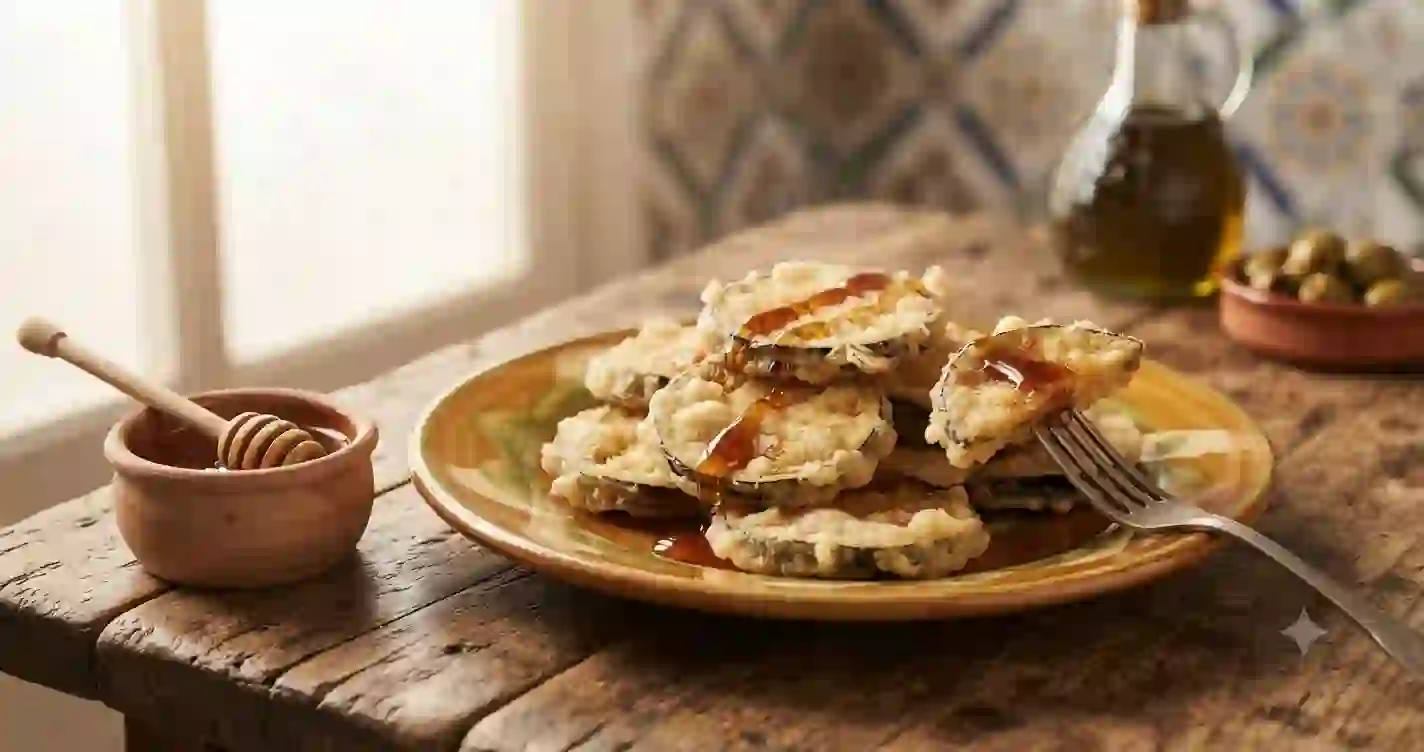
Berenjenas con miel translates to “eggplants with honey.” The dish features thin slices of eggplant, lightly coated in flour or a thin batter, fried until golden, and drizzled with warm honey or cane syrup. It lands on your table as a sweet-and-salty tapa that shatters under your fork before melting on your tongue.
The recipe comes from Andalusia, southern Spain, with deep roots in Córdoba and Seville. Many families pass down their own version, changing the batter, the honey, or the cut of the vegetable. Despite the name, authentic spots often use miel de caña (cane honey) rather than bee honey. This dark, molasses-like syrup brings a gentle bitterness that balances the fried eggplant’s richness.
Cooks first salt the sliced eggplant to draw out bitterness and moisture. After a quick rinse and dry, the pieces get dusted in wheat flour—sometimes with a touch of baking powder for extra puff—and flash-fried in olive oil. The final drizzle of warmed honey happens seconds before serving, so the eggplant stays shatteringly crisp.
The Secret to an Authentic Plate
An authentic best berenjenas con miel near me experience relies on four non-negotiables. First, the eggplant variety matters. Small, firm Italian or Spanish eggplants with fewer seeds give the cleanest taste. Second, the oil must be extra virgin olive oil, not a blend. Third, the honey or cane syrup should arrive warm, never cold. Fourth, the dish hits the table within a minute of frying—delaying even two minutes turns golden crunch into soft, oily regret.
Look at the plate before you eat. The eggplant slices should lie in a single layer, not piled into a soggy heap. A light sheen of honey pools on the plate, not a sticky swamp. The color runs pale gold to deep amber, with tiny blistered edges where the batter puffed in the oil. If you see a thick, doughy crust or a pool of dark, burnt syrup, the kitchen cut corners.
I once ate at a small bar in the Santa Cruz neighborhood of Seville where the owner refused to drizzle the honey until I held my camera-ready fork. “Every second counts,” he said, tapping the hot plate. That attention turned a simple dish into something unforgettable. You can find that same care near you if you know what to watch for.
Why “Best Berenjenas con Miel Near Me” Searches Fail (and How to Fix Them)
Typing “best berenjenas con miel near me” into Google often returns a pile of generic Spanish restaurants, chain tapas joints, and delivery-only ghost kitchens that have never seen a bottle of cane honey. The algorithm prioritizes proximity and review volume, not authenticity. A place with 400 four-star reviews because it pours cheap sangria may outrank a family-run bar that makes flawless berenjenas con miel but barely bothers with its online presence.
Fix your search by adding neighborhood names, city districts, or even the Spanish term berenjenas fritas con miel. Switch from Google Maps to local food apps like TheFork or a trusted Spanish food blog with regional guides. When you scroll reviews, ignore the star count and hunt for keywords: “thin batter,” “cane honey,” “not greasy,” “crunchy as advertised.” A handful of detailed, recent reviews from people who clearly know the dish beats two hundred generic five-star ratings every time.
How to Spot a Restaurant That Gets It Right
Walk past the menu window and look for these signals before you even sit down.
- The kitchen is open or semi-visible. You want to hear the rapid sizzle of frying.
- The menu lists berenjenas con miel de caña or berenjenas fritas con miel—not just “fried eggplant.”
- The olive oil bottles on the table carry a D.O. (Denominación de Origen) seal, signaling that the restaurant takes its oil seriously.
- A separate tapas menu, not a laminated one with pictures of every dish, usually means the kitchen focuses on a tight rotation of fresh plates.
- The staff can tell you, without hesitating, what type of honey they use and whether the batter includes egg or just flour.
A restaurant that values transparency will share these details. During one of my trips to Córdoba, a chef proudly showed me a five-liter tin of Sierra de Cazorla olive oil and a jar of dark cane honey from a local colmado. That level of ingredient pride tells you the kitchen respects the dish. Seek that same energy near you.
Regional Variations Across Spain
Berenjenas con miel shifts character as you travel from Andalusia to the north. Knowing the regional style helps you decide if the plate you found matches the “best berenjenas con miel near me” you actually crave.
| Region | Batter Style | Honey Used | Texture | Best City to Try |
|---|---|---|---|---|
| Andalusia (Classic) | Thin wheat flour dusting, sometimes with sparkling water | Miel de caña or dark orange blossom honey | Feather-light crisp, almost tempura-like | Córdoba, Seville |
| Catalonia | Light tempura batter with a touch of olive oil in the mix | Chestnut or rosemary honey | Slightly thicker shell, deeper golden color | Barcelona |
| Madrid (Fusion) | Often uses panko or a thicker beer batter | Mixed flower honey, sometimes spiced with chili | Heavy crunch, less greasy | Madrid’s tapas markets |
| Basque Country | Barely floured, fried quickly in sunflower-olive oil blend | Linden or acacia honey | Delicate, wetter bite | San Sebastián |
| Canary Islands | Gluten-free chickpea flour batter | Palm honey (miel de palma) | Nutty, dense crust | Tenerife |
If the version near you leans toward the thick, panko-crusted side, you are likely tasting a Madrid-style adaptation. That can be delicious, but if you are hunting the airy crisp of Andalusia, keep searching.
The Honey Matters More Than You Think
Restaurants that cut costs reach for industrial glucose syrup dyed amber. You taste it immediately—a flat, one-note sweetness that coats your mouth and kills the eggplant’s delicate flavor. The best berenjenas con miel near me always uses real honey or genuine cane syrup with complexity.
Authentic miel de caña comes from slow-boiling sugarcane juice until it darkens and thickens. It carries notes of toffee, dried fruit, and a faint earthy bitterness. Bee honeys like orange blossom bring floral brightness, while chestnut honey adds a smoky edge. When a kitchen knows its honey’s harvest date and origin, the dish sings. I once tasted a version in a tiny Granada bar that paired fried eggplant with thyme honey from the Sierra Nevada. The herbal kick transformed the whole plate.
Before you order, ask the server, “Is the honey local or imported?” A blank stare means lower standards. An enthusiastic “From a farm 20 kilometers away” means you have found a treasure.
How to Order Like a Local
Locals rarely order just one tapa. They build a small parade of plates that complement the sweet eggplant. Walk in and say, “Una ración de berenjenas con miel, por favor, y ¿qué me recomiendas para acompañar?” (“A portion of berenjenas with honey, please, and what do you recommend to go with it?”). That phrase signals you care about the experience.
A solid Andalusian tapas flight might include salmorejo (cold tomato soup), flamenquín (breaded pork roll), and the berenjenas con miel as the sweet bridge before cheese or cured meats. Share the dishes. The eggplant arrives hot, so eat it first. Press your fork down, hear the crackle, and take the bite while the honey still ribbons off the slice.
5 Questions to Ask Before You Sit Down
Use these questions on the phone, through a booking app, or as you scan the bar.
- Do you use cane honey or bee honey for the berenjenas con miel?
- Is the batter made with wheat flour, or do you add egg or beer?
- What type of olive oil do you fry in?
- Do you prepare the dish to order, or is it pre-fried?
- Can you show me the eggplant variety you use?
A restaurant that answers all five without flinching earns your trust. If they dodge or mumble, keep walking. I once asked a waiter in a tourist-heavy plaza about their honey source, and he pointed to a supermarket squeeze bottle. The plate that arrived tasted like regret and corn syrup. Those five seconds of questioning saved me many times since.
The Best Drink Pairings
Berenjenas con miel demands a drink that cuts through the sweetness while respecting the olive oil’s fruitiness. Skip the sweet sangria. Instead, reach for a chilled fino or manzanilla sherry. These dry, bone-white wines from Jerez scrub your palate clean between crispy bites. A crisp verdejo white wine or a bone-dry Albariño also works.
For non-alcoholic options, sparkling water with a heavy squeeze of fresh lemon refreshes without competing. Some bars serve a chilled herbal tea infusion with lemon verbena, which adds a light, fragrant counterpoint. Stay away from sugary sodas that layer more sweetness over the honey.
Making Berenjenas con Miel at Home
When you cannot find the best berenjenas con miel near me, your own kitchen becomes the next best address. The process rewards patience.
Slice a small, firm eggplant into quarter-inch rounds. Arrange the slices in a colander, sprinkle generously with salt, and let them weep for 30 minutes. This step extracts bitterness and excess water. Rinse well and pat completely dry—wet eggplant steam-fries instead of crisping.
While the eggplant rests, choose your honey. I keep a jar of dark cane honey and a separate local orange blossom honey for different moods. Warm two tablespoons gently in a small pot. Do not let it boil; low heat keeps the floral notes alive.
Set up a wide, heavy skillet with half an inch of extra virgin olive oil heated to 350°F (175°C). Toss the dried slices in a bowl with just enough all-purpose flour to coat lightly, shake off any excess, and slide them into the hot oil. Fry for about 90 seconds per side until the edges curl and the color blushes gold. Drain on a wire rack—never paper towels, which trap steam—for 20 seconds, transfer to a warm plate, and drizzle the honey immediately. Serve with flaky sea salt.
This recipe appears in chef Omar Allibhoy’s “Tapas Revolution” cookbook, where he emphasizes that the oil temperature must stay steady. A study from the University of Córdoba’s Gastronomy Lab confirmed that frying at 170–180°C creates the lightest crust while preserving the eggplant’s texture.
Common Mistakes That Ruin the Dish
Even experienced cooks stumble with a few traps. Overcrowding the pan drops the oil temperature, making the eggplant absorb grease instead of sealing instantly. Using cold honey from the fridge shocks the hot crust, turning it chewy. Skipping the salting step leaves behind metallic bitterness that no amount of syrup hides. Reheating fried eggplant in a microwave creates a limp, waterlogged result—always reheat in a hot oven or an air fryer set to 375°F for two minutes.
At restaurants, the biggest red flag is a plate that arrives lukewarm or visibly sitting under a heat lamp. Berenjenas con miel never improves with waiting. If a dish hits your table without that tiny wisp of steam rising from the honey, send it back.
Frequently Asked Questions About Berenjenas con Miel
Is berenjenas con miel gluten-free?
Traditional versions use wheat flour, so the dish contains gluten. Some restaurants and home cooks use chickpea flour or rice flour to make a gluten-free alternative. If you need a gluten-free option, always ask about flour choice and cross-contamination in the fryer. A knowledgeable kitchen can adjust the batter without ruining the crunch.
What’s the difference between miel de caña and regular honey?
Miel de caña is a sugarcane syrup, not bee honey. It cooks down from pressed cane juice into a dark, slightly bitter syrup with notes of molasses and caramel. Regular honey, like orange blossom or rosemary, comes from bees and tastes brighter and more floral. Many of the best berenjenas con miel near me use cane syrup for its depth, but traditional bee honey makes a beautiful, lighter plate.
Can I order berenjenas con miel as a full meal?
The dish works as a shared tapa or a starter. A full ración (larger portion) can serve as a light lunch when paired with a salad or a bowl of salmorejo. Most Spaniards eat it alongside other small plates rather than as a standalone main course. The richness of the fried eggplant and honey makes it satisfying, but I find it shines brightest among friends reaching for a shared bite.
What time of year do restaurants serve the freshest version?
Eggplant peaks in late summer and early autumn in Spain. August through October brings the most tender, seedless eggplants to the market, which fry into the crispest slices. During these months, the best berenjenas con miel near me features the vegetable at its absolute prime. Off-season versions can still please if the kitchen sources high-quality produce, but the dish hits its stride when eggplants are local and abundant.
Does berenjenas con miel need to be eaten immediately?
Yes. The dish deteriorates within three to four minutes of leaving the oil. Even the finest kitchen cannot stop the honey from softening the crust over time. Eat it first, as soon as the plate lands. Taking photos is fine, but make it quick. I once spent an extra minute adjusting my camera angle and lost the perfect crunch—lesson learned.
Can I find vegan berenjenas con miel?
The basic recipe is naturally vegan—eggplant, flour, olive oil, and plant-based honey or cane syrup. However, some restaurants add egg to the batter or drizzle the dish with bee honey. If you follow a vegan diet, ask whether the batter contains egg and confirm the sweetener is cane syrup, agave, or another plant-based option. Many traditional Andalusian bars serve a vegan version without even thinking about the label because their grandparents never used egg or dairy.
Where to Start Your Search Right Now
Grab your phone and open a food-focused app, not just a general search engine. Type “best berenjenas con miel near me” but add a neighborhood or landmark. Filter for restaurants with a rating above 4.2, then open the photo gallery. A real winner shows close-up shots of glossy eggplant slices, not a blurry dining room. Read the three most recent reviews and circle back to the questions I shared earlier.
Trust your instincts. If a place feels like it cares, it probably does. If the menu feels stretched across five cuisines, move on. The best plate of berenjenas con miel you will ever eat likely sits inside a modest bar with chipped floor tiles, a cook who yells back to the kitchen, and a jar of amber cane honey warming near the stove.