Paul Flores: Kristin Smart Case, Trial & Facts
The Case That Took 26 Years to Close — And the Man at Its Center
Kristin Smart vanished in May 1996 after a college party. For more than two decades, her family had no answers, no remains, and no conviction. One name stayed central to the investigation the entire time: Paul Flores. Investigators never stopped watching him. In 2022, a California jury delivered the verdict that a family had waited a lifetime to hear. This article covers everything documented about Paul Flores — his background, the case timeline, the trial, and the conviction.
Paul Flores: Complete Biography at a Glance
| Category | Detail |
|---|---|
| Full Name | Paul Austad Flores |
| Date of Birth | 1976 |
| Age at Kristin Smart’s Disappearance | 19 years old |
| Hometown | Arroyo Grande, California |
| Education | California Polytechnic State University, San Luis Obispo (Cal Poly SLO) — did not graduate |
| Enrollment Status in 1996 | Freshman at Cal Poly SLO |
| Occupation (later years) | Various reported employment in Southern California |
| Arrest Date | April 13, 2021 |
| Charges | First-degree murder of Kristin Smart |
| Trial Verdict | Guilty — first-degree murder (October 2022) |
| Sentence | Life in prison without the possibility of parole |
| Father | Ruben Flores — convicted as accessory after the fact |
| Co-Defendant | Ruben Flores (father) |
| Case Jurisdiction | San Luis Obispo County, California |
| Presiding Judge | Judge Craig Van Rooijen |
Who Is Paul Flores? Early Life and Background
Paul Flores grew up in Arroyo Grande, a small city on California’s Central Coast, roughly 12 miles south of San Luis Obispo. He enrolled at California Polytechnic State University San Luis Obispo — commonly called Cal Poly SLO — as a freshman in the fall of 1995.
By all accounts from classmates and investigators, Paul Flores was an unremarkable student in terms of academic achievement or campus presence. He lived in the Muir Hall dormitory, the same residence hall where Kristin Smart also lived during the 1995–1996 academic year. That shared dormitory connection became the most critical geographic detail in the entire case.
Photographs and records from that period show Paul Flores young — a teenager adjusting to college life in a close-knit university town. Nothing in his visible background at the time signaled the trajectory his life would take. The events of May 25, 1996 changed everything.
Kristin Smart: Who Was She?
Understanding the Paul Flores case fully requires understanding who Kristin Smart was. She deserves recognition as a person, not just as a case name.
Kristin Denise Smart was born on February 1, 1977, in Augsburg, West Germany, where her father served in the U.S. Army. The family settled in Stockton, California, and Kristin enrolled at Cal Poly SLO in fall 1995 — the same semester as Paul Flores.
By her freshman year, she was:
- 19 years old and studying at Cal Poly SLO
- Known among friends as warm, adventurous, and social
- Planning to pursue a career that would take her far beyond the Central Coast
- A daughter, sister, and friend whose absence would define her family’s next three decades
Kristin Smart never returned home from a party on May 25, 1996. She was last seen alive walking with Paul Flores toward her dormitory in the early morning hours. She was officially declared legally dead in 2002, though her remains were not recovered until 2021.
The Night of May 25, 1996: What Happened?
The documented sequence of events that night comes from witness accounts gathered by law enforcement across multiple interviews over several years.
Kristin Smart attended an off-campus party at a residence on Crandall Way in San Luis Obispo. Multiple witnesses at the party described her as intoxicated when she left. Several partygoers began walking toward campus together, but witnesses confirmed that the group thinned as people split off toward their separate dorms.
The last verified witness account places Paul Flores and Kristin Smart walking together toward campus, with Kristin appearing unwell. No witness account places Kristin Smart arriving at her dormitory. No roommate, resident advisor, or fellow student reported seeing her return that night.
Paul Flores told investigators the following morning that he had walked Kristin partway back and then separated from her to go to his own dorm. He reported no distress, no struggle, no unusual incident. That account would be tested and ultimately rejected by a jury 26 years later.
The Investigation: 1996 to 2021 — 25 Years of Scrutiny
Law enforcement agencies and journalists tracked the Kristin Smart disappearance continuously across a quarter century. The investigation involved multiple agencies, dozens of search operations, and sustained focus on Paul Flores throughout.
Key investigation milestones:
- 1996: San Luis Obispo County Sheriff’s Office opens missing persons case; Paul Flores identified as a person of interest within days
- 1996: Paul Flores invokes Fifth Amendment rights and declines to answer further investigator questions — a legally protected choice that nonetheless kept him central to the case
- 1997–2000: Periodic searches of areas near the Cal Poly campus yield no remains
- 2002: Kristin Smart declared legally dead under California law
- 2010–2019: Cold case investigators and journalists, including the podcast “Your Own Backyard” by Chris Lambert, bring renewed public attention to the case
- 2020: DNA and cadaver dog evidence prompts investigators to focus on the property of Ruben Flores, Paul Flores’s father, in Arroyo Grande
- February 2021: Search of Ruben Flores’s Arroyo Grande property produces evidence consistent with the presence of human remains beneath the rear deck area
- April 2021: Kristin Smart’s remains confirmed recovered from a second location — the property of a Flores family associate
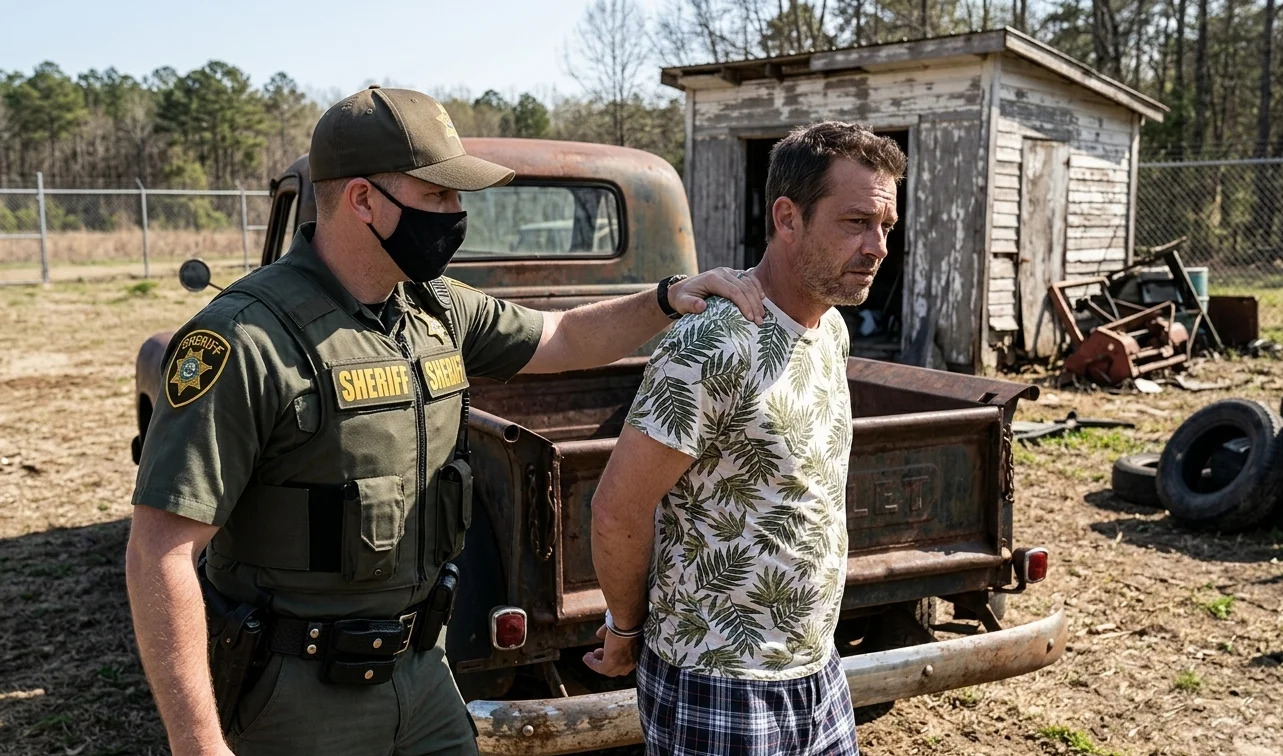
- April 13, 2021: Paul Flores arrested and charged with first-degree murder; Ruben Flores arrested as an accessory after the fact
The podcast “Your Own Backyard” by independent researcher Chris Lambert played a documented role in reinvigorating public attention during the years before the arrest, demonstrating how sustained community focus can affect cold case outcomes.
Paul Flores and Kristin Smart: The Core Evidence at Trial
The 2022 trial of Paul Flores presented evidence accumulated across decades of investigation. The prosecution’s case rested on several categories of physical evidence, witness testimony, and behavioral documentation.
Physical evidence:
- Cadaver dog alerts at the Arroyo Grande property of Ruben Flores, specifically targeting soil beneath the rear patio deck
- Soil samples containing DNA consistent with Kristin Smart’s biological profile
- Physical evidence connecting Kristin Smart’s remains to an area accessible to Paul Flores
Witness testimony:
- Multiple witnesses described seeing Paul Flores with Kristin Smart as the last known person with her
- Former associates of Paul Flores provided testimony about statements and behavior he exhibited after Kristin’s disappearance
- Several women testified that Paul Flores had sexually assaulted them in separate incidents, evidence the court allowed to establish pattern behavior
Behavioral evidence:
- Paul Flores’s Fifth Amendment invocations during multiple interviews over the years
- Changes in Paul Flores’s account of events across different interview periods
- His father Ruben Flores’s coordinated movements around the property in the weeks before the 2021 search
The 2022 Trial: Process, Verdict, and Sentencing
The murder trial of Paul Flores opened in San Luis Obispo County Superior Court in 2022. Judge Craig Van Rooijen presided. The trial drew national media attention and ran across several weeks of testimony and evidence presentation.
Trial timeline overview:
| Phase | Date Range | Key Events |
|---|---|---|
| Jury selection | Mid-2022 | Standard voir dire process in San Luis Obispo County |
| Prosecution case | Summer 2022 | Physical evidence, witness testimony, pattern behavior evidence presented |
| Defense case | Summer–Fall 2022 | Defense challenged forensic conclusions and witness credibility |
| Closing arguments | October 2022 | Both sides summarized evidence for the jury |
| Verdict | October 3, 2022 | Jury finds Paul Flores guilty of first-degree murder |
| Sentencing | December 2022 | Life in prison without the possibility of parole |
The jury deliberated and returned a guilty verdict on first-degree murder. Paul Flores showed no visible reaction in court when the verdict was read. The Smart family, present in the courtroom, visibly responded with a combination of relief and grief that was widely reported by media covering the proceedings.
Ruben Flores — the father’s case:
Ruben Flores faced a separate trial on charges of accessory after the fact to murder. His trial resulted in a guilty verdict as well, with a sentence of three years in prison.
Paul Flores Young: What His Early Profile Revealed
Investigators and journalists who reviewed Paul Flores’s behavior during his brief time at Cal Poly noted several documented concerns. These details emerged through trial testimony and investigative reporting rather than speculation.
Among the documented behavioral history:
- A prior accusation of sexual misconduct at Cal Poly SLO in the period before Kristin Smart’s disappearance, which was investigated at the university level
- Social behavior described by peers as boundary-crossing in ways that made female classmates uncomfortable
- His presence at the same party as Kristin Smart on the night of her disappearance was confirmed by multiple independent witnesses
The prosecution used this background to build a picture of Paul Flores young as someone whose conduct fit a consistent pattern rather than representing an isolated incident. The defense challenged this framing throughout the trial.
Why Did It Take 26 Years to Convict Paul Flores?
This question sits at the heart of public interest in the case. The delay resulted from a specific combination of factors, not from investigative failure alone.
Reasons for the delayed conviction:
- No body for 25 years: Without physical remains, prosecutors lacked the forensic foundation needed to move beyond reasonable doubt on murder charges. California law requires strong evidence in homicide cases even when a body is absent, but juries respond differently to physical evidence than to circumstantial accounts.
- Fifth Amendment protections: Paul Flores’s legal right to decline answering questions was valid and exercised consistently. Investigators could watch him but could not compel testimony.
- Evidence degradation over time: Physical evidence from 1996 existed in limited quantities. Forensic science capabilities that existed in 2020 did not exist in 1996, which meant some evidence could only be properly analyzed decades after collection.
- Jurisdictional complexity: The case crossed multiple property locations, including sites in San Luis Obispo and Arroyo Grande, requiring coordination between agencies.
- The role of technology advancement: DNA analysis capabilities improved substantially between 1996 and 2020, making it possible to confirm biological material that earlier testing had not definitively identified.
The Smart family publicly credited the sustained community attention — including Chris Lambert’s podcast work — with keeping law enforcement investment in the case alive during years when cold cases can otherwise go dormant.
The Smart Family: 26 Years of Advocacy
Denise Smart (mother), Stan Smart (father), and Kristin’s siblings never accepted the absence of answers. They gave interviews, attended every significant case development, and maintained public pressure on the investigation consistently over nearly three decades.
Their presence at the 2022 verdict became one of the most reported moments of the trial week. Denise Smart’s statement after the verdict — delivered with the composed grief of someone who had lived with this loss for 26 years — was quoted widely in national and international coverage.
The Smart family’s advocacy mirrors the experience of many families in cold case investigations. Their persistence did not solve the case on its own, but it prevented the case from disappearing from public and investigative attention during the long years before the 2021 arrest.
Paul Flores Today: Current Status
As of June 2025, Paul Flores serves a life sentence without the possibility of parole in the California state prison system. He has not made public statements or given interviews since his conviction.
His father Ruben Flores served his three-year sentence. The properties involved in the investigation — including the Arroyo Grande home where evidence was found — have no ongoing legal status in the case.
The Kristin Smart case is officially closed. Her remains were given to her family, and her death certificate — previously listing cause of death as unknown — was updated following the conviction.
Frequently Asked Questions About Paul Flores
Q1: Who is Paul Flores and why is he significant?
Paul Flores is a California man convicted in October 2022 of the first-degree murder of Kristin Smart, a Cal Poly SLO student who disappeared in May 1996. He was the last known person to be seen with Kristin Smart before her disappearance and remained the primary suspect for the entire 26-year investigation. His conviction closed one of California’s most prominent cold cases.
Q2: What was the connection between Paul Flores and Kristin Smart?
Paul Flores and Kristin Smart were both freshmen at California Polytechnic State University San Luis Obispo in the 1995–1996 academic year. They lived in the same dormitory building, Muir Hall. On the night of May 25, 1996, multiple witnesses confirmed that Paul Flores walked with Kristin Smart — who was intoxicated — toward campus from an off-campus party. No witness ever confirmed she arrived safely at her dorm.
Q3: When was Paul Flores arrested and what were the charges?
Paul Flores was arrested on April 13, 2021, more than 24 years after Kristin Smart’s disappearance. He faced a single charge of first-degree murder. The arrest followed a major search of his father Ruben Flores’s Arroyo Grande property, which produced physical evidence including soil samples with DNA consistent with Kristin Smart’s biological profile.
Q4: What sentence did Paul Flores receive?
Paul Flores received a sentence of life in prison without the possibility of parole, handed down in December 2022 following his October 2022 first-degree murder conviction. He will remain incarcerated in the California state prison system for the remainder of his life with no eligibility for parole consideration.
Q5: What role did the podcast “Your Own Backyard” play in the case?
“Your Own Backyard,” produced and hosted by independent researcher Chris Lambert, investigated the Kristin Smart disappearance through extensive interviews, document review, and community outreach. The podcast launched in 2019 and generated massive public attention that reinvigorated focus on the case during the period immediately before the 2021 arrest and evidence discoveries. Law enforcement officials acknowledged the podcast’s role in sustaining public awareness.
Q6: Was Paul Flores’s father also convicted?
Yes. Ruben Flores, Paul Flores’s father, faced a separate trial on charges of accessory after the fact to murder. A jury convicted him based on evidence that he helped conceal Kristin Smart’s remains on his Arroyo Grande property. Ruben Flores received a three-year prison sentence.
Justice Arrived — 26 Years Late but Certain
The Paul Flores case stands as one of the clearest demonstrations of what sustained investigative work, advancing forensic science, and community attention can achieve together. A family waited 26 years. Investigators never closed the file. A podcaster spent years documenting what others had overlooked. The result was a first-degree murder conviction that gave the Smart family the legal closure they had pursued across most of their adult lives.
Kristin Smart was 19 years old when she disappeared. She deserved to finish her education, build her life, and grow old. The conviction of Paul Flores does not return what was taken — but it confirms, on the public record, exactly what happened and who was responsible.
If you want to understand the full investigative arc of this case, Chris Lambert’s “Your Own Backyard” podcast remains the most detailed public record of the years between 1996 and the 2021 arrest. Start there, read the court records, and let the documented facts speak for themselves.
Share this article with anyone researching the Kristin Smart case — and drop a question below if there is a detail we have not covered.