Bugbear Meaning: Definition, Origins & Modern Usage
What Exactly Is a Bugbear?
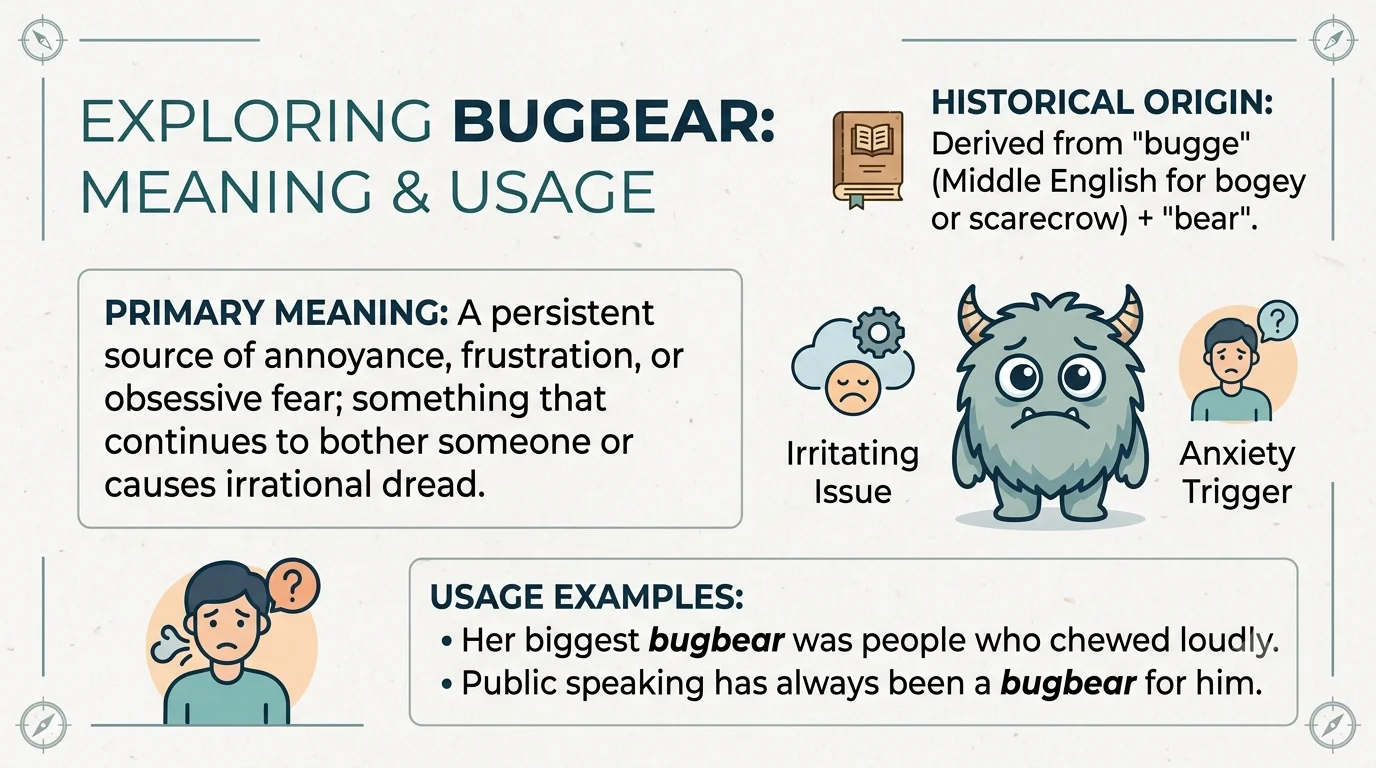
A bugbear is anything that causes persistent, often irrational fear or irritation. The word splits into two clear buckets. In folklore, a bugbear is a hairy, goblin-like creature used to frighten children. In everyday speech, a bugbear is a personal annoyance — a pet peeve that gnaws at you. The Oxford English Dictionary traces the term to the mid-16th century, combining “bug” (a frightening specter) and “bear” (a beast that looms large in the imagination). The beauty of bugbear meaning sits in this dual life: a monster under the bed and the loud chewing that makes your skin crawl.
The Medieval Folklore Behind the Bugbear
English parents in the 1500s needed a quick way to keep children from wandering into the woods after dark. They invented bugbears — shaggy, shadowy things that supposedly lurked beyond the treeline. These early bugbears shared DNA with the bogeyman and the hobgoblin. Katharine Briggs, the legendary folklorist, described them as “frightening apparitions that fed on anxiety.” Unlike today’s sanitized fairy tales, the original bugbear meaning offered zero charm. It was pure dread, dressed in matted fur and glowing eyes, designed to make children obey curfew.
Three key traits defined the folkloric bugbear:
- It appeared only at night or in dim light.
- It created unease rather than direct physical harm.
- It vanished once the frightened person returned to safety.
The bugbear occupied a strange mental space — real enough to terrify a child, yet shapeless enough to morph into whatever each village feared most.
Bugbear Meaning in Dungeons & Dragons
Modern fantasy fans know the bugbear through Dungeons & Dragons, where the creature gained muscle, weapons, and a cruel personality. The D&D Monster Manual (5th Edition) describes bugbears as large, hairy goblinoids that stand over 6 feet tall. They stalk silently and prefer ambush over fair combat. This version of the bugbear meaning shifted the monster from shadowy fright into a tactical threat.
Key D&D bugbear stats:
- Size: Medium humanoid (goblinoid)
- Armor Class: 16 (hide armor, shield)
- Hit Points: 27 (5d8 + 5)
- Speed: 30 ft.
- Stealth: +6, and the Brute feature adds an extra damage die to melee attacks
- Surprise Attack: Deals an extra 2d6 damage if it hits a surprised target
Gary Gygax included bugbears in the earliest D&D modules, drawing directly from the folklore but making them flesh-and-blood enemies. Today, the bugbear meaning in tabletop gaming always implies danger, cunning, and a love for ambush tactics.
Bugbear vs Hobgoblin vs Goblin: Quick Comparison
People often blur bugbears, hobgoblins, and goblins into one category. That glosses over real differences that matter for fantasy readers, D&D players, and word nerds alike.
- Goblin: Small, weak, mischievous; a nuisance in large numbers.
- Hobgoblin: Larger and more disciplined than a goblin; militaristic, often lawful evil.
- Bugbear: The biggest of the three goblinoid cousins; sneaky, brutal, and fond of terrorizing the weak.
While a goblin steals your chickens and a hobgoblin organizes a raid, a bugbear crawls through your window while you sleep. Understanding the bugbear meaning among goblinoids requires knowing it occupies the top of that nasty food chain.
The Idiomatic Bugbear: A Modern Pet Peeve
Walk into any British pub or American break room, and you might hear someone say, “Grammar mistakes are my biggest bugbear.” The word has traveled far from its monster roots. Today, the bugbear meaning functions as a synonym for pet peeve, annoyance, or bête noire.
Common modern bugbears people name:
- Slow internet connections
- People who talk during movies
- Autocorrect changing words you actually typed correctly
- Dishes left in the sink
- Loud phone conversations on public transit
This idiom carries zero supernatural baggage. When your coworker calls meetings with no agenda their “bugbear,” they simply express frustration — no goblins involved.
Why Do We Call Annoyances “Bugbears”?
The bridge between “monster” and “minor irritation” makes sense once you examine it. A bugbear in folklore caused a low-grade, persistent dread — not life-threatening, but impossible to ignore. That same nagging quality describes modern annoyances. A flickering lightbulb you keep forgetting to change mirrors the old bugbear’s habit of sitting just outside your door, refusing to leave.
Language historians note that the shift began in the late 1800s, when writers started using “bugbear” metaphorically for social and political complaints. By the 1920s, the term had fully shed its literal monster skin for most speakers. The bugbear meaning now splits evenly: you find the creature in fantasy novels and the idiom in everyday conversation.
Bugbear in Literature and Pop Culture
Bugbears slip into classic and modern works more often than you might notice.
- Charles Dickens used “bugbear” in Bleak House to describe a baseless fear that haunted a character’s mind.
- J.R.R. Tolkien never named a bugbear directly, but scholars argue the hobgoblins mentioned in The Hobbit borrow bugbear traits from English folklore.
- Critical Role, the web series, features a memorable bugbear NPC named Kotho who blends menace with dark humor.
- World of Warcraft players encounter bugbears reskinned as “Wildhammer dwarves” in certain questlines — a nod to how the creature has crossed cultural boundaries.
Each appearance reinforces the core bugbear meaning: something that lurks, unsettles, and rarely announces itself until it’s too late.
How to Use “Bugbear” Correctly in Writing and Speech
Clarity matters when you deploy a word with two meanings. Use these guidelines to make your intended bugbear meaning unmistakable.
- When you mean the monster: Provide a visual or context clue. “The bugbear crouched behind the overturned cart, its yellow eyes tracking the torchlight.”
- When you mean the pet peeve: Pair it with a possessive or a context clue. “My biggest bugbear is people who chew with their mouth open.”
- Avoid mixed signals: Don’t say “My bugbear attacked the waiter” unless you actually write fantasy fiction.
The word works best when you let your sentence clarify which version of bugbear meaning you intend. A reader should never have to guess whether you’re describing a monster or a bad habit.
Table: Bugbear Meaning Across Different Contexts
This table captures the full range of bugbear meaning in one clean reference.
| Context | Meaning | Example Usage | Origin/Time Period |
|---|---|---|---|
| English Folklore | A hairy, frightening creature used to scare children | “If you stray past the hedgerow, the bugbear will snatch you.” | 16th century |
| Dungeons & Dragons | A large, stealthy goblinoid monster with brute strength and ambush tactics | “We rolled initiative as three bugbears stepped out of the shadows.” | 1974 (Original D&D) |
| Modern Idiom (UK/US) | A persistent personal annoyance or pet peeve | “Slow walkers on sidewalks are my number one bugbear.” | Late 19th century to present |
| Literary Metaphor | An imaginary fear or exaggerated concern | “He let the bugbear of public speaking rule his career decisions.” | 18th–19th century literature |
| Psychology (informal) | A minor but intrusive worry or trigger | “Checking work email after hours has become her daily bugbear.” | 20th century onward |
No single row defines the term entirely. The richness of bugbear meaning lives in how all five contexts connect to a shared root: something that bothers you from the shadows, real or imagined.
Common Misconceptions About Bugbears
A few myths cling to the word, and clearing them sharpens your understanding.
- Misconception: A bugbear is the same as a bogeyman.
Reality: A bogeyman is a personalized threat (“The bogeyman will get you”). A bugbear is a specific creature with a furred, beast-like appearance in folklore. - Misconception: Bugbears are always evil in games.
Reality: Dungeons & Dragons labels them “chaotic evil,” but homebrew campaigns and newer sourcebooks sometimes feature bugbear NPCs who break the mold — mercenaries, reluctant allies, or even comic-relief guards. - Misconception: The phrase “that’s my bugbear” is only British.
Reality: It appears more often in British English, but American writers use it too, especially in opinion columns and literary essays.
Knowing these distinctions prevents the awkward moment of using the word incorrectly in a group chat full of fantasy fans.
The Psychology of Identifying Your Own Bugbears
The things that bug you — your personal bugbears — reveal more about your wiring than you might expect. Psychologists suggest that strong aversions to specific small irritations often connect to values. Someone who despises tardiness likely prizes respect and reliability. A person whose bugbear is loud chewing may have heightened sensory sensitivity.
Naming your bugbears does two helpful things. First, it externalizes the irritation so you can laugh at it. Second, it pinpoints what you care about. When you say, “My bugbear is people who cancel plans at the last minute,” you announce that commitment matters to you. The bugbear meaning transforms from a monster into a mirror.
Frequently Asked Questions About Bugbear Meaning
What does the word bugbear literally mean?
The literal bugbear meaning breaks into two parts: “bug” (a term for a frightening spirit or goblin, used since Middle English) and “bear” (the animal, evoking something large and intimidating). Together they formed a word for a hairy, bear-like monster that haunted the dark.
Is a bugbear the same as a pet peeve?
Yes, in modern casual speech, the bugbear meaning aligns closely with “pet peeve.” Both describe a specific, repeated annoyance that bothers one person more than most. The difference is purely historical: pet peeve comes from “peevish” (irritable), while bugbear carries centuries of monster lore inside it.
Where did bugbears originally come from?
Bugbears originated in English folklore during the 1500s as cautionary figures. Parents described them as shaggy, shadow-dwelling creatures to frighten children into obedience. The bugbear meaning stayed rooted in bedtime threats until fantasy games and literature reimagined the creature.
How are bugbears different from hobgoblins?
Bugbears stand larger and prefer stealth and brute force over hobgoblins’ military discipline. The bugbear meaning in D&D specifically separates them: hobgoblins form organized armies, while bugbears operate as solo ambushers or small bands that strike from hiding.
Can bugbear be used as a verb?
No, the word functions only as a noun. You can say “This is my bugbear” or “Bugbears terrified the village,” but you cannot say “He bugbeared me.” The bugbear meaning stays consistent as a naming word for a thing, creature, or concept.
Why do people call annoyances bugbears instead of just saying “annoyance”?
The word adds texture. Calling something a bugbear implies it bothers you in a creeping, persistent way — like the folklore monster that would not leave. It also signals a touch of self-awareness, as if you recognize the irritation might be slightly irrational but real all the same.
Final Thoughts and a Small Challenge
You now know the bugbear meaning inside out — from the shaggy shadow in a medieval forest to the rude email habit that makes your eye twitch. Words this old survive because they adapt, and bugbear adapted beautifully, keeping its claws in fantasy while walking into everyday speech.
Pay attention this week to what you call a bugbear. Write it down. Share it with someone. When you name your bugbears, you take ownership of them. And if you ever roll initiative against a bugbear in a D&D campaign, you will know exactly what those glowing eyes mean.
Bookmark this page for the next time someone asks, “Wait, what’s a bugbear again?” — and send it their way.