Space Force Orbital Warship Carrier
Imagine a vessel so powerful it controls the high ground of outer space. That is the promise of the Space Force orbital warship carrier. This is not just a ship. It is a mobile fortress. It floats silently above our planet, ready to protect our way of life. For many, space seemed like a peaceful frontier. But today, we know it is the next battlefield. The United States Space Force understands this truth deeply. They are building the future. And at the heart of this future lies this incredible carrier. It represents safety, strength, and American ingenuity.
We are no longer just sending satellites up there. We are sending a guardian. This guardian will watch over our communication lines, our GPS, and our banks. When you look at the stars now, you can feel a little safer. You can know that a Space Force orbital warship carrier is up there, keeping the peace. It is a bold step forward. It shows the world that we value security above all else. This vessel changes the game entirely. It makes space a place of protection, not just exploration.
What Exactly is a Space Force Orbital Warship Carrier?
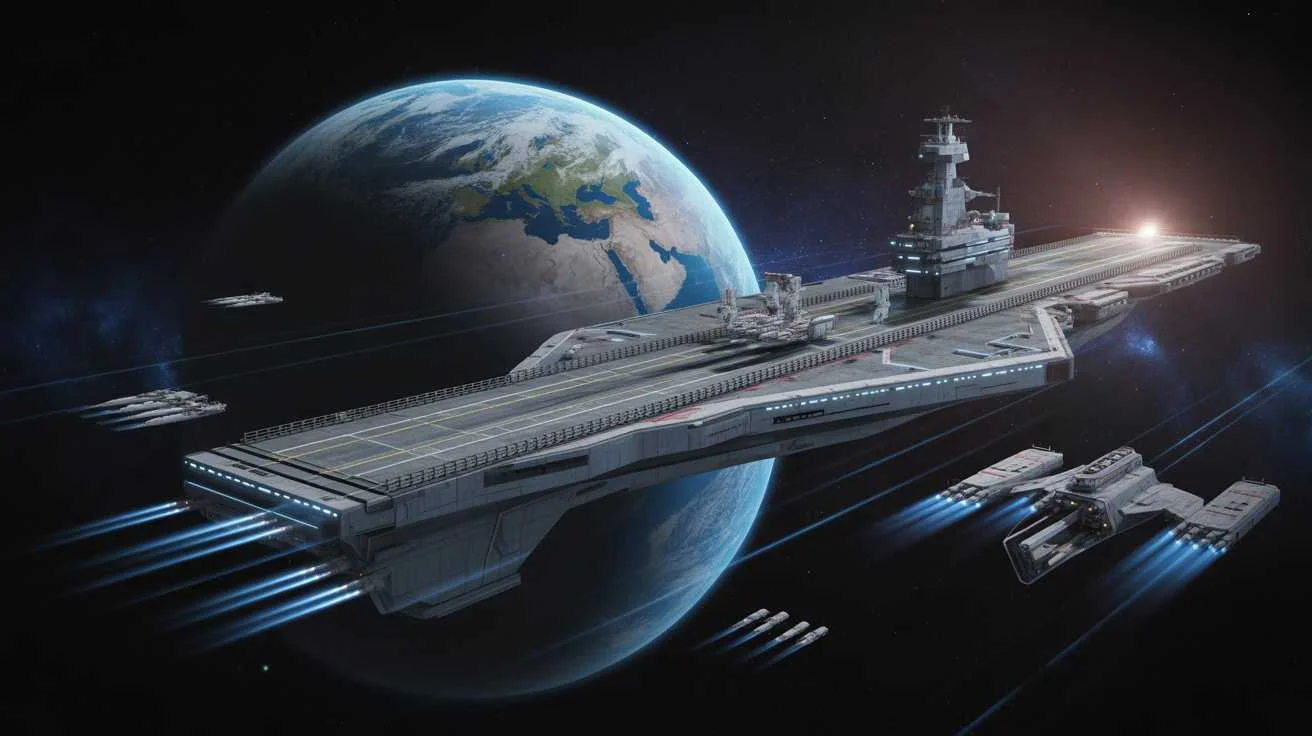
To understand the future, we need to look at this machine. A Space Force orbital warship carrier is a massive platform. It stays in orbit around Earth. It does not just fly around like a small shuttle. It looms large. Think of it like an aircraft carrier on the ocean. But instead of water, it sails through the vacuum of space. It carries smaller ships, drones, and weapon systems. It acts as a base for the Guardians who serve on it. This carrier is built to last. It can withstand the harsh conditions of space. It has shields against radiation. It has engines that allow it to change position quickly. The main job is defense.
It protects our vital satellites from attack. It can also launch missions to stop incoming threats. This is a game-changer for national security. For a long time, our space assets were vulnerable. They were easy targets. Now, with a mobile carrier, we have a shield. We have a mobile command center that can react instantly. This is the ultimate high ground. From this vantage point, the carrier can see everything. It offers an unmatched level of awareness. It ensures that no hostile action goes unnoticed.
The Strategic Importance of Space Dominance
Why do we need a Space Force orbital warship carrier? The answer lies in strategy. Space is critical to our daily lives. Every time you use your phone, you rely on space. Every time you use a credit card, a satellite makes it work. If an enemy took out our satellites, our country would go dark. There would be no internet. There would be no bank transactions. Planes would stop flying safely. This is unacceptable. A Space Force orbital warship carrier ensures that does not happen. It acts as a deterrent. It tells other nations, “Do not try it.”
The cost of an attack would be too high. The carrier can deploy countermeasures. It can launch swarms of small defense drones. It can jam enemy signals. It can even engage hostile spacecraft. This is about holding the line. The United States has always protected its borders. Now, we are extending that protection to space. This is not about aggression. It is about stability. A safe space environment is good for the whole world. By having this carrier, we prevent chaos. We ensure that the final frontier remains open and secure for everyone. It is a promise of safety.
Advanced Propulsion and Mobility Systems
How does a Space Force orbital warship carrier move? It uses technology that seems like science fiction. Traditional rockets are too slow. They are also hard to control for a ship this size. The carrier uses advanced propulsion. We are talking about ion drives and next-gen nuclear thermal engines. These systems allow the ship to change orbit smoothly. It can shift from low Earth orbit to a higher geostationary orbit. It can even move to lunar orbit if needed. This mobility is key. A stationary target is an easy target. A moving target is safe. The carrier can dodge space debris. It can reposition to cover different areas of the planet. The engines are efficient.
They can run for years without refueling. This means the carrier stays on station for long durations. It does not need to come home often. This saves money and resources. The ship is also agile. It has small thrusters for precise movements. It can dock with other vessels. It can align its weapon systems perfectly. This agility makes it a formidable opponent. It is not just a big, slow target. It is a nimble giant. It moves with purpose and precision. This keeps the crew safe and the mission on track.
The Arsenal: Defensive and Offensive Capabilities
A Space Force orbital warship carrier is powerful, but it is also smart. It does not rely on just one weapon. It has a layered defense system. First, it has point-defense lasers. These lasers shoot down incoming missiles or debris. They work at the speed of light. There is no escape. Second, it carries kinetic interceptors. These are small rockets that can chase down threats. They are like smart bullets. For offense, the carrier can deploy “space drones.” These are small, agile ships. They can swarm an enemy vessel.
They can disable it without causing huge explosions. This is important because debris in space is dangerous for everyone. The carrier also has electronic warfare suites. It can jam enemy radar and communications. It can even spoof signals. It can make the enemy see things that are not there. This non-kinetic warfare is very effective. It stops a fight before it starts. The carrier is a weapon of precision. It is designed to neutralize threats with minimal collateral damage. This shows responsibility. It shows that we are not just building weapons to destroy. We are building tools to control and protect.
Crew and Life Support: Home Among the Stars
Who serves on a Space Force orbital warship carrier? They are called Guardians. They are the best of the best. They are pilots, engineers, strategists, and scientists. Living in space for months is hard. So, the carrier is built like a home. It has artificial gravity sections. These sections spin to create a pull like Earth. This keeps the crew healthy. Their bones and muscles stay strong. The life support systems recycle everything. Air and water are cleaned and reused. There are no supply runs every week. The carrier grows its own food.
Hydroponic gardens provide fresh vegetables. This boosts morale and health. The crew quarters are private. They have personal space. There are gyms, entertainment areas, and even virtual reality rooms. Keeping the mind healthy is as important as the body. The carrier fosters a strong community. The Guardians live together, work together, and trust each other. This tight-knit family is the heart of the ship. The technology is amazing. But the people are what make it work. Their bravery and skill ensure the carrier fulfills its mission. They are the true heroes of the stars.
The Role in Protecting American Assets
The primary job is defense. A Space Force orbital warship carrier protects American assets. We have billions of dollars in satellites. These are not just metal boxes. They are the backbone of our economy. The carrier watches over them. If a satellite gets damaged, the carrier can help. It can deploy repair crews. It can even act as a temporary relay station. It ensures communication never stops. This is vital for the military. Our troops on the ground rely on space for intelligence. They rely on GPS for navigation.
The carrier makes sure those signals are clean and uninterrupted. It is a force multiplier. It makes the entire US military stronger. It also protects commercial interests. Private companies are launching more satellites than ever. They need a safe environment. The carrier provides that safety net. It deters space pirates or hostile nations. This allows business to thrive. It allows innovation to continue. Without this protection, space would become a wild west. It would be chaotic and dangerous. The carrier brings order. It creates a secure environment where everyone can operate safely. It is a cornerstone of modern national security.
Manufacturing and Construction: Building a Leviathan
Building a Space Force orbital warship carrier is a monumental task. You cannot build it on Earth. It is too heavy to launch. So, we build it in space. This is called in-orbit assembly. We launch the parts on heavy rockets. Then, robots and astronauts put it together. It is like building a massive Lego set in zero gravity. The construction takes years. It requires new manufacturing techniques. We use 3D printing in space. We use advanced alloys and composites. The hull is thick. It protects against micrometeoroids and radiation.
The process involves many companies. It is a national project. It brings together the best minds in the country. The construction site is a space dock. It orbits Earth like a construction yard. This is a huge step forward. It proves we can build big things in space. This opens the door for even more projects. It shows our industrial might. It shows we have the skills to do hard things. The completion of the carrier is a milestone. It marks a new age of space infrastructure. It proves that humanity is becoming a true spacefaring civilization.
The Carrier Group: A Fleet in the Stars
A single Space Force orbital warship carrier does not work alone. It is the center of a “carrier group.” Just like the Navy, it has escorts. These are smaller warships. They are called “cutters” or “defense platforms.” They fly around the carrier. They act as lookouts. They intercept threats before they get close to the main ship. There are also logistics vessels. They bring supplies and fuel. There are electronic warfare ships. They create a bubble of protection. This group is a formidable force. It covers a large area of space. It is self-sufficient.
It can operate far from Earth. The carrier directs the group. It tells the escorts where to go. It coordinates the defense. This team strategy is very effective. It is hard to defeat a group. If you attack one ship, the others respond. This layered defense makes the carrier nearly invulnerable. It is a complex dance of machines. They move in perfect harmony. This shows the sophistication of the Space Force. They are not just building a single ship. They are building a complete ecosystem of defense. This fleet ensures total space superiority.
Communication Networks and Data Fusion
How does the carrier stay in touch? It uses quantum communication and laser links. These are secure. They cannot be hacked easily. The carrier is the hub of a massive data network. It connects to Earth, to other ships, and to satellites. It processes huge amounts of information. It uses AI to analyze data. It can spot threats before they emerge. This “data fusion” is a superpower. It takes information from sensors and turns it into a clear picture. The commander sees everything. They see where every friendly ship is.
They see where every potential threat is. They can make decisions faster. Speed is everything in space combat. The communication systems also support the crew. They can talk to their families. This reduces the stress of long deployments. The carrier is a smart ship. It learns from its environment. It adapts to new situations. This constant connection makes it more than a weapon. It is an eye in the sky. It provides intelligence that keeps our nation safe. It is a node of power that strengthens our entire defense network.
Future Upgrades and Technological Evolution
A Space Force orbital warship carrier is built to last, but it also evolves. Technology changes fast. The carrier is designed for modular upgrades. You can pull out old systems and plug in new ones. In five years, it will have better lasers. In ten years, it might have new propulsion. This keeps it relevant. It never becomes obsolete. The Space Force is always researching. They are working on directed energy weapons. They are working on advanced AI pilots. These will be added to the carrier over time. It is a platform for future tech.
It is not just a ship; it is a testbed. This saves money. You do not need to build a new carrier every decade. You just upgrade the one you have. This is smart planning. It ensures we always have the best technology. It keeps us ahead of our adversaries. The carrier is a long-term investment. It will serve for decades. As threats change, the carrier changes with them. It is a dynamic system. It is always getting better. This commitment to evolution shows strength. It shows we are thinking about the future.
The Economic Impact and Job Creation
Building and maintaining this carrier creates jobs. It is not just about the military. It is about the economy. Thousands of engineers build the parts. Technicians maintain the systems. Software developers write the code. This is high-tech work. It pays well. It supports families across the USA. It also spurs innovation. The tech developed for the carrier often finds its way into our daily lives. The internet came from military projects. GPS came from military projects. The carrier will bring the next wave of innovation.
We will see better batteries, better materials, and better AI. This benefits everyone. The carrier is an investment in our future. It creates a skilled workforce. It inspires young people to study science and math. They want to work on these amazing machines. This strengthens our nation’s competitiveness. It keeps the USA as the leader in technology. The economic ripple effect is huge. It goes far beyond the defense budget. It builds a stronger, smarter America.
Global Reactions and Alliances
The world is watching the Space Force orbital warship carrier. Our allies feel safer. They know the USA is a reliable partner. We share data with them. We protect the common interests. This strengthens alliances like NATO. It brings us closer to our friends. Other nations see the carrier and respect our capability. It encourages peaceful cooperation. When one nation is dominant, it reduces the chance of conflict. It sets the rules of the road. The USA is establishing norms for space behavior.
We are showing what responsible space operations look like. We are saying, “We will protect this domain for everyone.” This leadership is important. It prevents a chaotic arms race. It encourages other nations to be transparent. It pushes for treaties that keep space peaceful. The carrier is a symbol of stability. It reassures the world that space will remain a safe place for commerce and exploration. It is a force for good. It uses power to create peace.
Challenges of Operating in the Void
Operating a Space Force orbital warship carrier is not easy. Space is a hostile environment. There is no air. There is extreme heat and cold. There is radiation. The carrier must withstand all of this. There is also the problem of debris. Thousands of pieces of junk fly around Earth. A small piece can cause big damage. The carrier has armor, but it also has sensors to dodge. It tracks thousands of objects. This is a constant challenge. The crew also faces psychological challenges. They are away from Earth for a long time.
They work in a dangerous environment. The Space Force trains them well. They have support systems. But it is still hard. The carrier also requires massive energy. The power systems are complex. They must work perfectly 100% of the time. There is no room for error. These challenges push our technology to the limit. Overcoming them makes us stronger. It proves we can handle the toughest environments. It builds confidence in our ability to defend the homeland.
Training the Next Generation of Guardians
Who will command this carrier? We are training them now. The Space Force has a new academy. They teach space warfare. They teach orbital mechanics. They teach leadership. These young men and women are brilliant. They are the best and brightest. Training is intense. They use simulators. They practice battles in virtual space. They learn to make split-second decisions. They learn to work as a team. The training is not just technical. It is also about character.
They learn ethics. They learn when to fight and when to hold back. They are taught to be guardians, not warriors. Their mission is protection. This human element is the most important. A ship is just metal. The people make it a weapon. The Space Force invests heavily in its people. They are treated with respect. They are given the best tools. This investment pays off. It creates a force that is ready for anything. It ensures that the carrier is in good hands. It ensures our future is secure.
Specifications of the Vessel (Detailed Table)
To truly understand the scale, we need to look at the numbers. The Space Force orbital warship carrier is a marvel of engineering. Below is a detailed table showcasing its key specs. This gives you a clear picture of its size, power, and capabilities.
| Specification Category | Details |
|---|---|
| Class | Freedom-Class Deep Space Carrier (DSV-1) |
| Length | 1,200 meters (Approx. 3,937 feet) |
| Width | 320 meters (Approx. 1,050 feet) |
| Mass | 250,000 metric tons (dry weight) |
| Primary Propulsion | Nuclear Thermal Rocket (NTR) & Ion Drive Hybrid System |
| Max Speed (Delta-V) | 25 km/s (Operational limit; Exceeds for interplanetary) |
| Crew Capacity | 500 Guardians (Standard) / 150 (Emergency Minimum) |
| Power Source | 2 x Compact Fusion Reactors (CFR-Mk IV) |
| Shielding | Multi-Layer Whipple Shield & Active Electro-Magnetic Deflector |
| Armament | 12 x Point-Defense Lasers (PDL), 8 x Kinetic Interceptor Missile Pods, 4 x Electronic Warfare Suites |
| Aircraft/Complement | 50 x “Stinger” Space Superiority Drones, 4 x “Pathfinder” Recon Shuttles, 10 x “Goliath” Heavy Lift Cargo Pods |
| Sensors | Quantum Entanglement Radar (QER) & Long-Range Optical Array |
| Hull Armor | Titanium-Au Alloy Composite with Nanite Self-Sealing Layer |
| Life Support | Closed-Loop Ecological System (99.9% water/air recycling) |
| Operational Altitude | Low Earth Orbit (LEO) to Geostationary Orbit (GEO) |
| Construction Cost | Estimated $48 Billion USD |
| Deployment Date | 2028 (Projected) |
Frequently Asked Questions (FAQs)
1. Is the Space Force orbital warship carrier armed with nuclear weapons?
No, the primary mission is defense and deterrence. The carrier uses conventional kinetic weapons, directed energy lasers, and electronic warfare. It avoids nuclear arms to prevent the risk of massive debris clouds and escalation in space.
2. How does the carrier defend against stealth attacks?
The carrier uses advanced quantum radar. This technology detects objects by their gravity signature. Stealth coatings do not work against it. The sensor network also includes hundreds of small, hidden drones that act as pickets.
3. Can the carrier land on Earth?
No, it is built exclusively for space. It is constructed in orbit and designed to stay there. Its hull and shape are not aerodynamic. It uses shuttles to transfer personnel and cargo to the surface.
4. How long can the crew stay in space on the carrier?
The crew typically serves 6 to 12-month tours. The life support systems are designed to function for 10 years without resupply. The limiting factor is human psychology, not technology. The Space Force rotates crews to keep them fresh.
5. What happens if the carrier is damaged in battle?
It has a modular design. Damaged sections can be sealed off. Onboard repair drones and 3D printers can manufacture replacement parts. It also carries spare modules. If the damage is severe, escort ships provide cover while it retreats to a space dock.
6. How does this affect NASA and civilian space programs?
It enhances their safety. With the carrier acting as a guardian, NASA and private companies can focus on exploration and commerce. They do not have to worry about security threats. The carrier protects the environment so science can thrive.
Conclusion
The Space Force orbital warship carrier is more than just a military asset. It is a symbol of our commitment to the future. It represents safety in a new frontier. It protects the technology we rely on every single day. From banking to weather forecasting, this vessel keeps our world running. It is a bold investment in peace through strength. The men and women who serve on it are pioneers. They are writing the next chapter of American history. This carrier ensures that space remains a place of opportunity, not conflict. It is a guardian angel for our planet.
As we look to the stars, we do so with confidence. We know we have the tools to protect what matters most. The journey is just beginning. The success of this program will inspire generations. It will lead to new technologies and new dreams. We are stepping into the future together. And with this carrier watching over us, it is a bright and secure future. Stay curious, stay safe, and watch the skies. The future is here, and it is extraordinary.
What are your thoughts on space defense? Do you think this carrier is the right step for humanity? Share your opinion in the comments below!
You Also Like To Read: Delta Math: Your Complete Guide to Success in Mathematics
About the Author