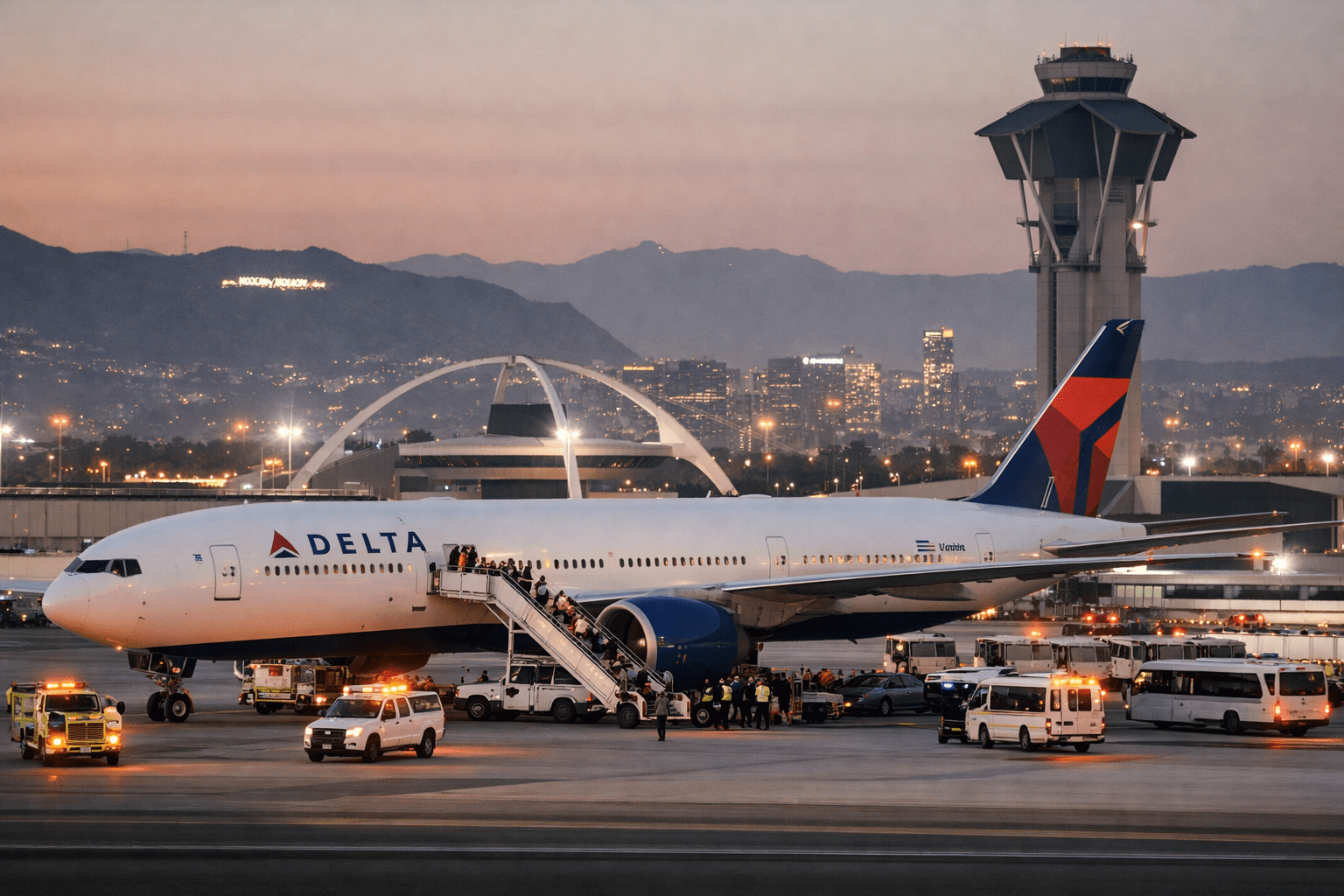
Delta Flight DL275 Diverted to LAX: What Happened & Key Details Real Story
Flying is a miracle of modern engineering, but sometimes, the skies throw a small surprise our way. That is exactly what happened on a late spring day when Delta flight DL275 diverted to LAX instead of continuing its long journey across the Pacific. For the passengers on board, this was an unexpected twist. But in the world of aviation, a diversion is rarely a sign of danger; it is a sign of caution. This particular incident, involving a state-of-the-art Airbus A350-900, became a perfect example of how airlines handle pressure.
Instead of panic, there was a plan. Instead of risk, there was a decision to prioritize safety above all else. When you hear that Delta flight DL275 diverted to LAX, it might sound like a failure, but as we dig deeper, you will see it was actually a victory for smart decision-making. The flight, originally heading to Tokyo, turned into a valuable lesson for everyone on board and for those of us watching from the ground.
The Original Mission: From Detroit to Tokyo
Let’s set the scene for this flight. Delta Flight DL275 was operating a massive route: a non-stop journey from Detroit Metropolitan Wayne County Airport (DTW) to Tokyo Haneda Airport (HND) . This is not a quick trip down the coast; this is a grueling long-haul flight that tests both human endurance and machine reliability. The aircraft chosen for this mission was the Airbus A350-900, a beautiful piece of technology known for its composite fuselage and fuel efficiency .
It left Detroit on May 28, 2025, with a full load of passengers excited to get to Japan . For the first few hours, everything was smooth. The plane climbed to its cruising altitude, and the cabin settled into the quiet rhythm of a long flight. No one on board had any idea that they were about to become part of an aviation story that would be shared widely online.
When Did Things Change for DL275?
The flight was going well until it reached a point over the Bering Sea. The plane had been in the air for about five hours, and the landscape below had turned into the cold, empty waters of the Pacific . Suddenly, the pilots in the cockpit noticed something unusual. A light appeared on their control panel indicating a problem. It was related to the “engine anti-ice system” . This system is crucial.
When planes fly at high altitudes, usually around 38,000 feet, the temperatures can drop to minus 60 degrees or lower. Ice can form on the engine’s components, which is dangerous. The anti-ice system blows hot air to stop that ice from sticking. The crew realized they had a fault. They were still safe, but the smartest move was to head to land. This was the precise moment the fate of Delta flight DL275 diverted to LAX was sealed.
Why LAX? The Strategy Behind the Choice
A lot of people might wonder, “Why didn’t they just go back to Detroit?” That is a fair question. But when you look at a map, you will see that by the time the issue popped up, the plane was much closer to the West Coast than to Michigan . Los Angeles International Airport (LAX) is not just any airport; it is a massive hub for Delta Air Lines . This matters because a diversion is not just about finding a strip of asphalt to land on. It is about finding a place where the airline has mechanics, spare parts, and gates available.
By choosing LAX, the pilots ensured that the aircraft could be inspected properly. It also meant that passengers would have access to better facilities. The decision to have Delta flight DL275 diverted to LAX was a logistical masterstroke. It turned a potential headache into a manageable situation.
The “Anti-Ice” Issue Explained in Plain English
Now, let’s talk about the technical problem in simple terms so we all understand. The engine anti-ice system on the Airbus A350 is designed to protect the Rolls-Royce Trent XWB engines . Think of it like the defroster in your car. On a cold morning, you turn on the defroster to melt ice so you can see. Airplanes do the same thing, but for the engine fans and sensors. If ice builds up there, it can break off and damage the engine blades. The system on DL275 sent a signal that it wasn’t working right .
Even if the ice wasn’t there yet, the crew knew they couldn’t risk flying over the ocean for another five hours without that protection. Weather changes, and they might hit a patch of moisture and cold air. So, the call was made. This is why Delta flight DL275 diverted to LAX—not because the plane was falling apart, but because the crew was thinking ahead.
Inside the Cabin: The Passenger Experience
What was it like for the people sitting in their seats? According to reports and similar firsthand accounts, the mood was calm . Modern pilots are trained to communicate without causing alarm. They likely came on the intercom and explained that there was a minor technical issue and that they were turning around as a precaution. There were no screams, no oxygen masks dropping, and no dramatic tilting of the plane. It was a smooth, controlled turn back toward California.
The flight attendants likely continued their service, maybe with a few curious looks from passengers. The real magic of modern aviation is boring. We want flying to be boring. And in this case, even with a diversion, the experience inside the cabin remained professional and quiet. For the 250 or so people on board, the news that Delta flight DL275 diverted to LAX was probably just an inconvenience, not a scare.
A Smooth Landing at Los Angeles International
After about five hours of flight time, the big bird finally made its descent into Southern California. The plane touched down safely at LAX just before 2:00 AM local time . Imagine landing in Los Angeles in the middle of the night. The airport was quiet, and the runway lights were bright. The aircraft taxied to the gate without any issues. Emergency vehicles were likely standing by as a routine precaution, but they weren’t needed.
The landing was as smooth as any other. This was the moment the stress ended for the pilots. They had successfully managed a risk and brought 100% of their passengers home safely. The fact that Delta flight DL275 diverted to LAX and landed without a scratch is a testament to the training of the flight crew. It was a textbook operation from start to finish.
What Happens After the Plane Parks?
Once the plane stopped at the gate, a whole new phase of the operation began. The passengers were taken off the plane. They were likely tired and confused. But Delta’s team at LAX jumped into action. Because LAX is a hub, they have dedicated staff for “irregular operations” . These are the people who handle flight cancellations and diversions. They helped passengers get hotel rooms, meal vouchers, and new bookings.
Some passengers were put on other flights to Tokyo. Others, maybe those who were too tired, decided to stay in Los Angeles for a day. The aircraft itself was towed to a maintenance hangar. Engineers hooked up their computers to diagnose exactly why the anti-ice system had sent a fault. They needed to make sure it was fixed before anyone else flew on it.
The Ground Time: Inspecting the Airbus A350
The Airbus A350-900 is a complex machine. It has millions of parts and thousands of sensors. Finding one small glitch can take time. In this case, the aircraft remained on the ground for approximately 18 hours . That is a long time for an airline, because a plane on the ground isn’t making money. But safety is worth more than money. Mechanics inspected the anti-ice system thoroughly. They ran tests, checked the valves, and looked at the engine cowlings.
They likely found a faulty sensor or a small valve that wasn’t switching correctly . After the repair, they tested it again. Once everything was perfect, the plane was cleared to fly. This thoroughness is why flying is so safe. When Delta flight DL275 diverted to LAX, it triggered a chain of events that ultimately made the aircraft even safer for its next flight.
Comparing Diversions: Not All Emergencies Are Equal
It is important to know that a “diversion” can happen for many reasons. Sometimes, it is a medical issue, like when a passenger has a heart attack and the plane needs to land immediately to get them to a hospital . Other times, it is weather, like fog in Seattle preventing a landing . But the DL275 diversion was different. It was a proactive, mechanical precaution. This wasn’t a “mayday” situation where the plane was on fire.
This was a “we have a small issue, and we want to fix it before it becomes big” situation. That distinction matters. When you read headlines saying Delta flight DL275 diverted to LAX, you might think it was dramatic. But in reality, it was a calm, calculated move. It shows the layers of safety built into every flight.
The Crew: The Unsung Heroes of DL275
We have talked about the plane and the airport, but the real stars of this story are the pilots and flight attendants. The pilots had to make a split-second decision that would inconvenience hundreds of people. They chose the harder right over the easier wrong. They chose safety. They had to coordinate with air traffic control, calculate new fuel burns, and figure out the best airport . Meanwhile, the flight attendants had to manage the cabin.
They had to answer questions with smiles and keep the energy calm. They are trained to handle emergencies, but they also handle the emotions of the passengers. When Delta flight DL275 diverted to LAX, the crew proved that human expertise is just as important as the machine. They are the reason everyone got off the plane smiling.
Compensation and Care: Delta’s Response
After the dust settles, passengers often wonder about compensation. Delta Air Lines has a reputation to uphold. Reports from similar incidents show that Delta usually takes care of their passengers . In the case of DL275, they provided hotel accommodations for those who needed them. They also helped rebook tickets. While cash compensation isn’t always guaranteed for mechanical issues (since they are safety-related), the gesture of providing meals and hotels goes a long way.
Some travelers might have even earned frequent flyer miles as a goodwill gesture. When a big airline like Delta has a flight divert, they know they have to win back the trust of those passengers. By treating them well on the ground, they ensure that those passengers will fly with them again.
What Travelers Can Learn from This Event
So, what can we, as regular travelers, take away from the story of Delta flight DL275 diverted to LAX? First, always listen to the safety briefing. It might save your life. Second, pack a small bag with essentials in your carry-on. If you end up in a different city than you planned, having a phone charger and a change of underwear is a lifesaver. Third, be kind to the crew. They are working hard to fix a situation they didn’t cause. Finally, trust the system. Aviation is incredibly safe because of decisions like the one made on this flight. It is easy to get frustrated when your travel plans change, but remember, it is always better to be on the ground wishing you were in the air, than in the air wishing you were on the ground.
The Final Outcome: A Return to Service
After its 18-hour pit stop in Los Angeles, the Airbus A350 was ready to go. It passed all its tests with flying colors. The plane eventually returned to service, flying other passengers to other destinations . The original passengers eventually made it to Tokyo, just a little later than planned. The story faded from the news, but the lessons remain. This event is now a case study in aviation schools. It teaches new pilots about the importance of the anti-ice system and the wisdom of diverting early.
Delta flight DL275 diverted to LAX will be remembered not as a terrifying ordeal, but as a routine, successful safety measure. It is a reminder that even in a world of high technology, the human ability to make a wise decision is still the most important tool in the cockpit.
Detailed Flight Diversion Table
Frequently Asked Questions (FAQs)
1. Why exactly was Delta flight DL275 diverted to LAX?
The flight was diverted because the pilots detected a fault in the engine anti-ice system while flying over the Pacific . This system stops ice from forming on the engines. Since they were facing a long flight over water, they decided to land in Los Angeles as a safety precaution.
2. Was the plane in danger when Delta flight DL275 diverted to LAX?
No, the plane was not in immediate danger. There was no fire, no explosion, and no loss of engine power. The decision was made out of an abundance of caution. The pilots wanted to fix a small problem before it had a chance to become a bigger one .
3. How long did Delta flight DL275 stay on the ground at LAX?
The aircraft remained on the ground at Los Angeles International Airport for about 18 hours. During this time, maintenance crews inspected the plane, fixed the anti-ice system issue, and ran tests to make sure everything was perfect before it flew again .
4. Did the passengers on Delta flight DL275 get any help from the airline?
Yes. Because Los Angeles is a major hub for Delta, the airline was able to provide passengers with hotel rooms, meal vouchers, and rebooking options to help them continue their journey to Tokyo or other destinations .
5. Is it common for flights like Delta flight DL275 to divert?
Diversions are not an everyday occurrence, but they are a standard part of aviation safety. Flights divert for many reasons, including weather, medical emergencies, or mechanical checks. It is always better to divert and be safe than to push forward with a potential risk .
6. What kind of plane was operating Delta flight DL275?
The flight was operated by an Airbus A350-900. This is a modern, long-range, wide-body aircraft known for its advanced technology, quiet cabin, and fuel efficiency. It is one of the most advanced planes in the sky today .
Conclusion
The journey of Delta flight DL275 diverted to LAX is more than just a news headline. It is a story about smart people making smart choices. It shows us that the aviation industry is built on a foundation of safety that never wavers. From the pilots who spotted the tiny fault in the anti-ice system to the ground crew in Los Angeles who fixed it overnight, every step was handled with care. The passengers might have been delayed, but they were never in danger.
So, the next time you buckle your seatbelt and hear the engines roar, remember Flight DL275. Remember that if something small goes wrong, there is a whole team of experts ready to make it right. Flying is safe because we plan for the unexpected. And in this case, the plan worked perfectly. If you enjoyed this deep dive into aviation safety, share this article with a friend who loves to travel. Let’s spread the word about the amazing work that happens behind the scenes every single day.
You Also Like To Read About Education Related Post Click Here