Oceania Cruises Review: Is This The Finest Cuisine at Sea?
For decades, the common joke about cruise ship food revolved around midnight buffets and endless soft-serve ice cream. It was about quantity, not quality. Then, in 2003, a new player—backed by a legendary French chef—decided to challenge that notion head-on. They bet the entire brand on the idea that people would sail across the ocean not for a rock-climbing wall, but for a perfectly seared scallop.
That brand was Oceania Cruises.
Today, Oceania occupies a fascinating space in the cruise world. It isn’t the ultra-luxury, all-inclusive price tag of a Seabourn or Regent. It’s not the floating amusement park of a Royal Caribbean. Instead, it sits in the sweet spot of “premium,” attracting travelers who value destination immersion and culinary excellence above all else. If you are considering your first voyage, or wondering if the hype is real, this deep dive will tell you everything you need to know.
The Oceania Difference: What Sets Them Apart
To understand Oceania, you have to look at the kitchen before you look at the deck plan. The line’s founding philosophy was simple: if you are going to take guests to the most beautiful places in the world, you should feed them the most beautiful food.
The Culinary Backbone
Oceania’s Executive Culinary Director is none other than Jacques Pépin, the iconic French chef. His influence isn’t just a marketing gimmick; it filters down to the stock used in the sauces, the flakiness of the pastry, and the insistence on cooking everything to order. The line operates on a “sea-to-table” concept, sourcing ingredients locally when possible and refusing to use pre-packaged or frozen components. On an Oceania ship, the baguette you bite into at breakfast was likely baked on board just hours before.
The “Ship-Within-a-Ship” Absence
You’ll notice Oceania doesn’t have a “resort deck” with water slides, nor does it have a separate “ship-within-a-ship” complex like the Haven on Norwegian or the Yacht Club on MSC. This is deliberate. The philosophy is that the entire ship should feel refined. Instead of creating a VIP ghetto, they elevate the entire guest experience, meaning whether you are in a standard veranda or a top-floor suite, the public spaces are consistently elegant and uncrowded.
Unpacking the Fleet: The “R-Class” and “O-Class” Experience
Oceania’s fleet is divided into two distinct families, each offering a slightly different vibe but maintaining the core brand DNA.
The Boutique Feel of the Smaller Ships
The four R-Class ships—Regatta, Insignia, Nautica, and Sirena—are the line’s secret weapon for itinerary lovers. Carrying just 684 guests, these ships feel like private yachts. They can slip into harbors that the mega-ships can’t touch, offering a true sense of adventure. The public rooms are cozy, you’ll recognize faces by day three, and the pace is wonderfully slow.
The Modern Luxury of the Larger Ships
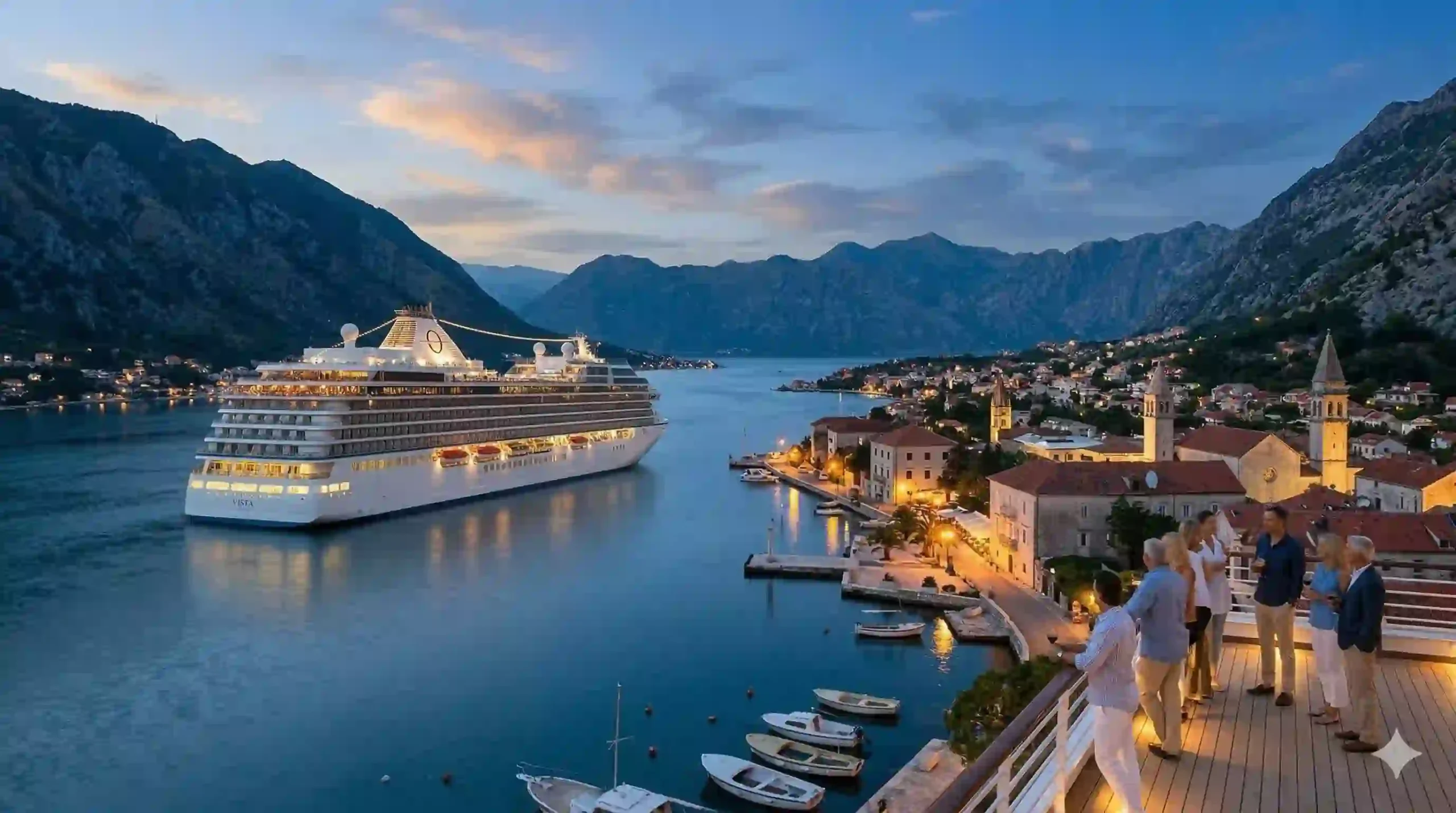
Marina, Riviera, and the brand-new Vista carry around 1,250 guests. While larger, they don’t feel like sprawling resorts. The extra space allows for more public venues—think a larger library, a more expansive Canyon Ranch Spa, and an even more impressive art collection. They maintain the boutique feel but offer you more “discoveries” to make throughout the week.
Onboard Accommodations
Space is a luxury, and Oceania understands this. Even standard veranda staterooms are noted for their generous square footage compared to many competitors. But the real standout? The bathrooms. They feature marble-lined showers (no cramped tub/shower combos) and premium amenities. If you’ve ever felt claustrophobic in a cruise ship shower, Oceania is a breath of fresh air.
Dining: A Deep Dive into the Venues
Let’s be clear: On most cruise lines, the “specialty” restaurants cost extra. On Oceania, they are included in your fare. And they are the main event.
The Grand Dining Room
The main dining room is elegant but not stuffy. The menu changes daily, offering classical French techniques alongside global flavors. Service is polished and professional. If you have a dietary restriction, the maitre d’ will often discuss the next day’s menu with you personally to ensure the chef prepares something exceptional.
The Specialty Restaurants
- Polo Grill: The quintessential American steakhouse. Think tableside Caesar salads, prime cuts of beef, and a dignified, clubby atmosphere.
- Toscana: If you love Italian food, this venue is dangerous. You’ll be tempted to order the chef’s homemade pasta flight. The setting is romantic, and the service is warm.
- Red Ginger: The Asian fusion venue found on the O-Class ships. The decor is stunning, with vibrant reds and dark woods. Do not leave without trying the Miso Glazed Sea Bass.
The Culinary Center
This is a true Oceania exclusive. It’s not a demo kitchen where a chef shows you how to cook; it’s a hands-on cooking school. You can book a class, put on an apron, and spend a sea day learning to make handmade pasta or perfect your knife skills under the guidance of a professional chef. It’s the ultimate souvenir: a skill you take home.
Casual Dining
Even the casual spots get the gourmet treatment. Waves Grill serves what many consider the best burger at sea, complete with a secret sauce and a side of perfectly salted truffle fries. The Terrace Cafe, the buffet, avoids the dreaded “cafeteria” feel with made-to-order stations and a sushi selection that rivals a decent city restaurant.
Destinations and Itineraries: Going Beyond the Tourist Trail
Oceania markets itself as “The Finest Cuisine at Sea,” but it’s equally dedicated to destination immersion.
Extended Port Times
Many cruise lines treat port calls like pit stops. You arrive at 8 AM and must be back on the ship by 3 PM. Oceania frequently offers late departures and overnight stays. This allows you to experience the nightlife in Barcelona, attend a concert in St. Petersburg, or simply enjoy a relaxed, unhurried dinner onshore. You aren’t just visiting a place; you are living in it, if only for a night.
Destination Services
The onboard concierge teams are less about booking the crowded “panoramic bus tour” and more about finding unique connections. They can arrange a private driver in Tuscany or secure a hard-to-get reservation at a trendy restaurant in Reykjavik. They act as your local fixer.
Who is Oceania Cruises For? (And Who Should Look Elsewhere)
Let’s be honest about the passenger profile.
The Ideal Oceania Passenger
You are likely an experienced traveler. You’ve done the big-ship thing and are looking for a more refined experience. You might be celebrating an anniversary or a milestone birthday. You are curious about food—not just eating it, but understanding it. You prefer a conversation in a quiet lounge to a high-decibel pool party. The average age tends to be 55 and up, but the vibe is active and engaged, not sedentary.
Families and Nightlife Seekers
If you have teenagers who need a water park, laser tag, or a go-kart track, Oceania is likely the wrong fit. There is no kid’s club in the way mainstream lines define it. Similarly, if you want to party until 4 AM, you’ll find the ship winding down earlier. This is a place for adults to relax, not to rage.
What’s Included? Deciphering the Fare Structure
Oceania’s pricing model has evolved. Currently, the “Simply More” offering is the standard.
Simply More™
Generally, this includes:
- Your stateroom.
- All food in all restaurants (including specialty dining).
- Round-trip airfare (with the option to customize for a fee).
- A shore excursion credit per guest, per voyage.
- A house beverage package including beer, wine, and spirits at lunch and dinner.
The Value of Gratuities
Traditionally, gratuities were an extra cost. Depending on your booking promotion or loyalty tier, they may be included. It is vital to check your specific invoice. If they aren’t included, budget for them; they are an expected part of the crew’s compensation.
Beverage Packages
The house package covers mealtimes. If you enjoy a cappuccino mid-morning, a glass of wine by the pool in the afternoon, and premium spirits in the evening, upgrading to the “Prestige Select” package is worthwhile. It saves you from signing slips of paper all week and offers a wider selection of top-shelf labels.
Practical Tips for First-Time Oceania Cruisers
Booking the Right Stateroom
The “sweet spot” for value on Oceania is the Veranda stateroom. It offers private outdoor space and is perfectly comfortable. If you want a step up, a Concierge Level Veranda often adds amenities like a welcome bottle of champagne and a cashmere lap blanket.
Dining Reservations
As soon as your booking window opens (usually 60-90 days out), book your specialty restaurants. Prime time slots (7:00-7:30 PM) vanish quickly. You are allowed to visit each restaurant once on a standard sailing, so plan your week.
Packing Tips
The dress code is “Country Club Casual.” For men, this means collared shirts and slacks or nice jeans in the evening. Jackets are never required, but many gentlemen enjoy wearing a sport coat in the specialty restaurants. Leave the tuxedo and gown at home; think “elegant comfort.” A good pair of walking shoes for port days and a light jacket for breezy decks are essential.
Conclusion: Is an Oceania Cruise Worth the Premium?
If you measure a vacation by the number of activities you cram in, the premium of Oceania might not make sense to you. But if you measure it by the quality of a single moment—sipping a Sancerre as you sail into a fjord, biting into a Jacques Pépin recipe in the middle of the ocean, or stepping off a gangway into a quiet Venetian square—then yes, it is absolutely worth it.
Oceania Cruises sells a specific kind of luxury: the luxury of time, taste, and tranquility. It is an investment in experiences that feel personal and authentic. For the right traveler, it isn’t just a cruise; it is the only way to cross the ocean.
FAQs:
- Do I have to pay extra for the specialty restaurants on Oceania?
No. Unlike many other cruise lines, all specialty restaurants (Polo Grill, Toscana, Red Ginger, etc.) are included in your cruise fare. - What is the average age of passengers on Oceania Cruises?
The demographic tends to be experienced travelers, typically aged 55 and older. However, the atmosphere is active and social rather than sedate. - Are drinks included in the price of an Oceania cruise?
Under the “Simply More” package, a house selection of beers, wines, and spirits is included with lunch and dinner. A full premium beverage package is available for an additional cost. - What is the difference between Oceania and Viking Ocean Cruises?
While both are premium lines, Oceania is heavily focused on culinary experiences and French-inspired cuisine, whereas Viking focuses more on destination-focused lectures and a spa-centric Scandinavian aesthetic. - Do Oceania ships have formal nights?
No. The dress code is “Country Club Casual.” You will not need a tuxedo or evening gown. Think slacks, collared shirts, blouses, and sundresses.